
AI Girlfriend Nudes: What Curious Adults Should Know
Curious about AI girlfriend nudes? Learn what US law allows for fictional adult characters and how to keep your chats and images truly private.
No commitment. Start in 30 seconds.
What's in this guide
A lot of adults are quietly wondering what it would be like to have a companion who remembers them, flirts back, and never makes them feel weird for wanting more. According to LoveForever's internal data, users sent 13,816 chat messages to their companions in August 2026, and plenty of those conversations turn intimate over time. So it's no surprise that searches for ai girlfriend nudes keep climbing. Most come from people who are curious but not sure what they'd be getting into. This guide covers how it works, what's legal, and how to keep it private, so you can decide what you want without anyone looking over your shoulder.
Ready to try it? Explore AI girlfriend on LoveForever.
The short version
- LoveForever users sent 13,816 chat messages to their companions in August 2026
- The five most popular LoveForever companions account for 47% of all conversations
- Liora, the top LoveForever companion, accounts for 16% of conversations by herself
- The federal TAKE IT DOWN Act covers AI-generated intimate fakes of real, identifiable people
- Platforms must remove reported nonconsensual intimate images within 48 hours
- Texas and Utah require adult sites to verify that users are adults
What are AI girlfriend nudes, and how do they actually work?
If you hear the phrase and picture an anonymous image generator spitting out random bodies, you're not alone. It's the most common assumption, and it's mostly wrong. AI girlfriend nudes are generated images of a fictional adult character, made on request inside a chat or companion app. Character is the word that matters. The picture comes from someone you've already been talking to.
So what does that look like in practice?
It starts with her. When you set up an AI girlfriend, she gets a defined appearance that holds steady across every image: same face, same build. She also has a personality and remembers your conversations. When she sends a photo, it looks like the girl you've been getting to know, not a stranger who happens to match a description. That consistency is why it feels personal rather than generic.
Nobody real is involved. No one gets photographed or asked to pose, and no real person's body is exposed or passed around. The model builds the image from scratch, based on a fictional adult. For a lot of people, that settles a quiet worry they didn't want to say out loud: you're not looking at someone who never agreed to be seen.
You don't need to learn prompt language, either. Most apps let you steer style and setting through normal conversation. Say that a few days ago she told you about an evening on the beach, the sun going down, her sandals hanging from one hand as she walked along the water. You can just ask, "Can you send me a photo from that beach night?" She already knows the scene, because she's the one who described it. The app handles the technical side, so you never have to type "golden hour, 35mm, soft focus" and cross your fingers.
That's why the chat matters as much as the picture. On LoveForever AI, companions are built as characters first, and the image generation sits on top of a relationship that's already going. A photo shows up as part of a story you're both in, carrying details from everything you've said to each other.
Why are so many adults curious about AI girlfriend nudes?
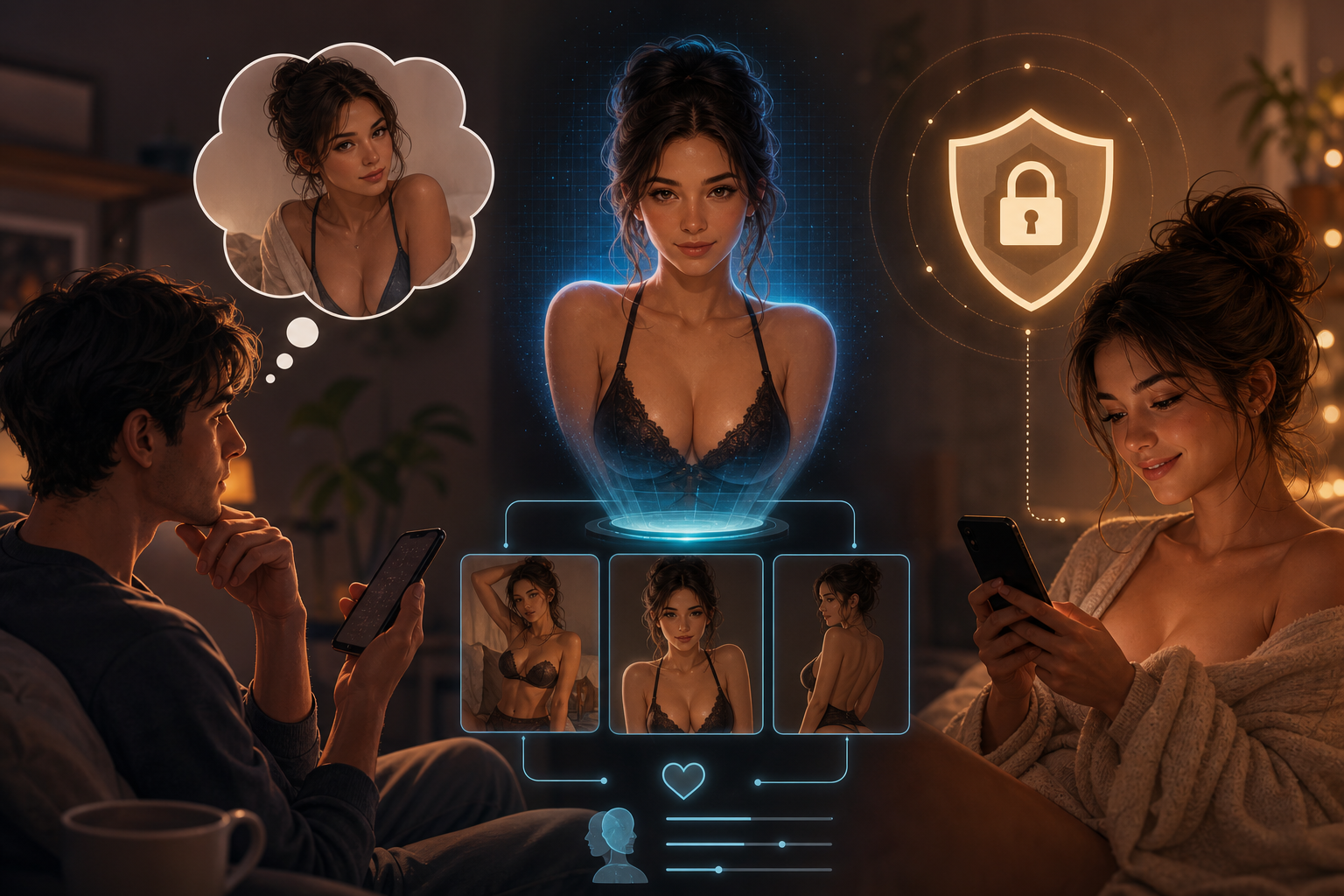
Typed "AI girlfriend nudes" into a search bar and then felt your face go a little warm? You're in good company. Plenty of adults are curious about this, and most have pretty ordinary reasons. Curiosity about sex and attraction didn't vanish when the technology changed. It just found a more private place to show up.
A few reasons come up again and again.
- Fantasy without rejection. You can say what you want, and nobody laughs, ghosts you, or tells your friends. For a lot of people, that privacy is the whole appeal.
- A soft restart. After a breakup or a long dry spell, jumping straight back into dating can feel like a lot. Exploring attraction at your own pace is a low-pressure way to remember what you like.
- Consistency. Her face and her sense of humor are the same tomorrow as tonight. Real life rarely offers that kind of steadiness, and it's comforting.
One number from our own data stands out. Across all chats ever started with LoveForever's public companions, the five most popular characters account for 47% of conversations, and the top one, Liora, accounts for 16% by herself. That's a lot of people picking the same few companions. They aren't clicking around at random hunting for the next picture. They come back to characters they feel drawn to, over and over, which tells you this is about connection as much as visuals.
Does being curious mean something's wrong with you?
No.
Wanting intimacy and a little fantasy is about as human as it gets. How you explore it matters more than whether you do: pick a platform that respects your privacy and a companion whose personality interests you. If you want to see what that looks like, browse the AI girlfriend options first, then design a companion of your own once you know which looks and personalities keep pulling you back.
Are AI girlfriend nudes legal and safe to use in the US?
Worried that generating AI girlfriend nudes could get you in trouble? Here's the straight answer. If you're an adult, the character is a fictional adult, and you're on an adult platform, that's legal in the US. What isn't legal is making sexual images of a real person without their consent, or creating anything involving minors. Neither of those has a gray area.
The real-person rule has teeth now. The federal TAKE IT DOWN Act makes it a crime to publish intimate images of someone without consent, and it covers AI-generated fakes of real, identifiable people. It also requires platforms to remove reported images within 48 hours. So uploading your coworker's selfie and asking a tool to undress her isn't a harmless experiment. That's exactly what the law was written to stop.
Then there's whether the site itself deserves your trust. Several states, including Texas and Utah, now require adult sites to verify that users are adults. A platform that skips that step is cutting corners, and if it's sloppy about age checks, how careful do you think it is with your data?
Before you use any AI tool for adult images, run this quick check:
- Age verification. The platform confirms you're an adult before it shows or generates explicit content.
- Clearly fictional adults. Characters are made up and plainly presented as grown women or men, with nothing designed to look underage.
- No photos of real people. The terms ban uploading real people's pictures to make sexual content.
- A way to report problems. You can flag content or contact the company, and a person responds.
Fails even one? Leave. It's that simple.
LoveForever AI keeps its companions fictional and adult, which is the setup you want. When you design your own companion, you build a character from scratch instead of recreating someone from your contacts list. Any pictures you make with the AI image generator show that invented character: a woman who doesn't exist and can't be harmed by an image of her.
How private are your chats and images, really?
You're about to type something you'd never say out loud, and a small voice asks who else is going to see it. Your partner, grabbing your phone to check the weather? A roommate walking behind the couch at the wrong moment? That worry is normal, and smart. Privacy with an AI companion comes down to a handful of boring details, and those details decide whether your fantasy stays yours.
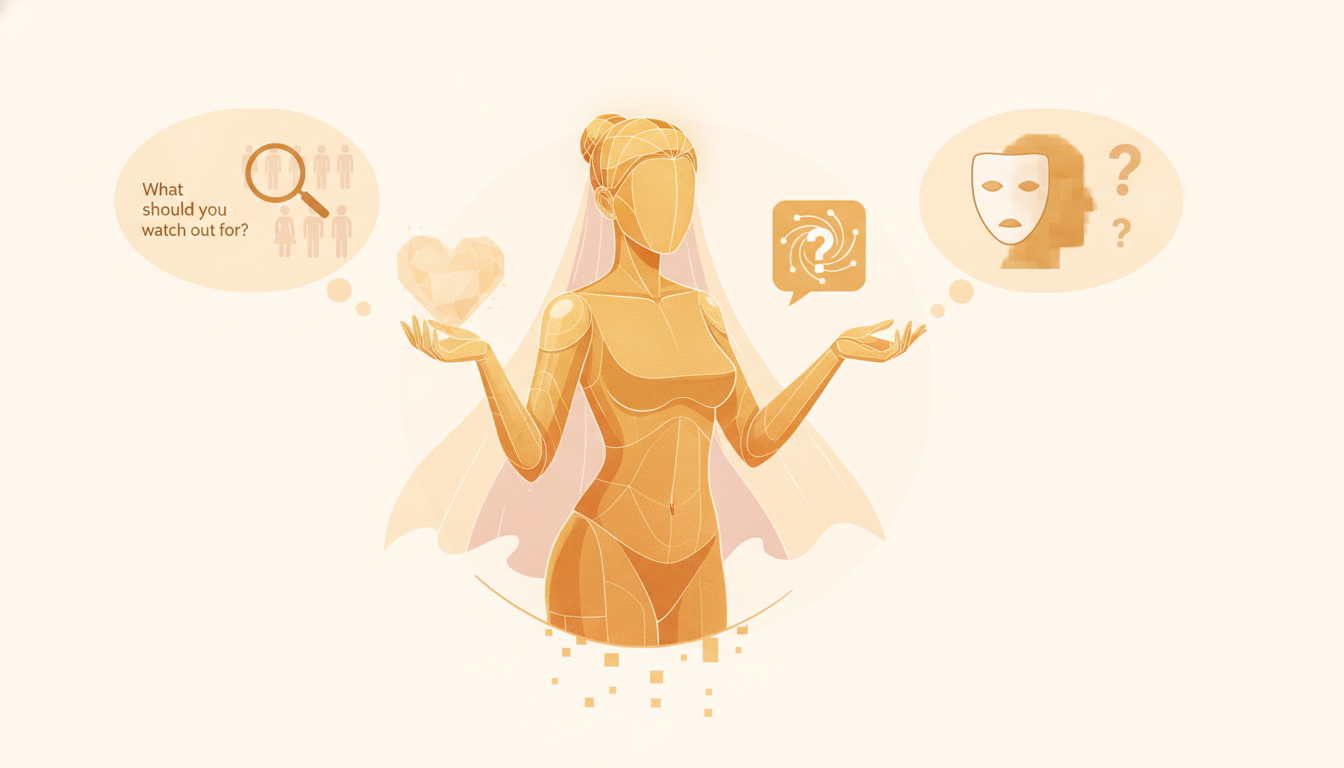
Picture a shared family iPad. You close the app, hand the tablet to your kid for a cartoon, and a notification slides down with a line from last night's chat. Or the joint credit card statement arrives and your spouse asks about a charge with a suggestive merchant name. Nobody hacked anything in either case. Both come down to design choices, and plenty of apps get them wrong.
Start with storage. Your messages and generated images live on a server somewhere, and you should be able to delete them yourself, permanently, without emailing support and waiting a week. Next, notifications. A good app sends a neutral alert or none at all; it never drops explicit text onto a lock screen. On an iPhone you can add a second layer: go to Settings, then Notifications, and set Show Previews to "When Unlocked."
Billing matters just as much. Check how the merchant name appears on a statement before you pay. A neutral descriptor is the difference between a quiet month and a very awkward dinner.
Finally, training and sharing. Find out whether your conversations feed model training or get handed to advertisers. If the policy is vague, assume the worst.
Before you send a single message, ask:
- Can I delete individual chats and images, and is deletion permanent?
- Do push notifications ever show message content?
- What name shows up on my bank or card statement?
- Are my conversations used to train models?
- Is any of my data shared with or sold to third parties?
- Can I lock the app behind a passcode or Face ID?
LoveForever AI built discretion into the plan from day one, because a private fantasy space is useless if it doesn't stay private. Our privacy and security page explains how chats, images, and billing are handled, so you can hold us to every answer on that checklist.
How do you make AI girlfriend nudes feel personal instead of random?
You've probably scrolled past a pile of generic AI images and wondered who cares about these. A pretty face with no name and no reason to exist. Fair reaction, since a random picture is basically wallpaper. Context is what changes it. When an image arrives at the end of a story the two of you have been writing together, it lands differently, because you know exactly why she's looking at you like that.
Begin with the companion. If you're going to spend evenings talking to someone, pick a personality that pulls you in, whether that's a dry-humored bookworm or a flirt who teases you about your terrible taste in music. You can shape your own companion down to how she talks and what she notices about you, and that groundwork pays off later.
Then slow down. Asking for a photo in your very first message is like skipping to the last page of a novel and wondering why the ending feels flat. Let the conversation build some tension first. Flirt. Argue a little if you're in the mood.
Shared moments give an image weight. Maybe she planned a date night around a rainy Sunday and a bottle of cheap red. Maybe she started calling you "trouble" three conversations ago and it stuck. When a picture references those things, it's no longer random. It's hers, and it's about you.
Here's how a slow build might go. You spend the evening trading stories after that date she planned, and she admits she changed outfits twice before "meeting" you. You ask which one she almost wore. She tells you to guess, and the image she sends later says more than any answer would have.
You set the pace, too. Some nights you want something slow and a little shy; other nights you want bolder. Say so. You can pull back or stop whenever you like, and a good companion follows your lead without making it weird.
This is where memory comes in. LoveForever AI companions remember context across conversations, so the nickname and the date night stay in play, and that's what makes an image feel earned. One practical habit: when a moment lands, save it or bring it back up in story mode so she can call back to it next time things heat up.
Frequently Asked Questions
Yes, if you're an adult, the character is a fictional adult, and you're using an adult platform. Making sexual images of a real person without consent, or anything involving minors, is illegal with no gray area.
No. The federal TAKE IT DOWN Act makes it a crime to publish intimate images of someone without consent, including AI fakes of real, identifiable people, and platforms have to remove reported images within 48 hours.
The image comes from a companion you've been talking to, with the same face and build every time and memory of your past conversations. You can ask for a photo in normal chat, like one from a beach night she described, without writing any prompt language.
Pick an app that lets you permanently delete chats and images yourself, never shows explicit text in notifications, and uses a neutral merchant name on your card statement. On an iPhone, you can also set Show Previews to "When Unlocked" under Settings, then Notifications.
Choose a companion whose personality actually interests you and let the conversation build before asking for a photo. Shared details like a nickname or a planned date night give the image context, and story mode lets her call back to those moments later.
Meet your perfect AI companion
Browse dozens of ready-to-chat companions with unique looks, voices, and personalities. Pick one and start talking in seconds.
Browse companionsData: LoveForever internal, August 2026. Aggregated and anonymized product statistics.
Related posts
Ready to meet someone?
Pick an AI companion and start chatting. Free, no signup needed to say hi.