
Best AI NSFW Image Generator Platforms in 2026
Compare the best AI NSFW image generator platforms in 2026. Learn what to look for in realism, privacy, prompt control, and pricing before picking an adult AI image platform.
 Age-verified · 18+ · Free to start, no signup to say hi
What's in this guide
Something shifted in 2026. AI image generation isn't a niche curiosity anymore; it's a full-blown creative medium, and adults are using it to explore fantasies they could never commission, describe, or find anywhere else. But with dozens of platforms popping up and just as many vanishing overnight, figuring out which ones actually deliver quality, privacy, and creative freedom is harder than it should be. This guide breaks down what matters most when choosing an adult AI image platform, so you can stop guessing and start creating with confidence.
Ready to try it yourself? Explore AI image generator on LoveForever AI.
What should you look for in the best adult AI image generator in 2026?
If you've only tried one free tool or scrolled past AI-generated images on Reddit, you probably have a rough sense of what's possible. But you might not know what separates a platform that delivers from one that wastes your time with blurry, awkward results. The gap is wider than you'd think.
Let's start with the obvious: image realism and consistency. The best platforms in 2026 produce near-photorealistic output at 1024x1024 resolution or higher. Skin textures look natural. Lighting behaves like real light. Hands, which used to be a running joke, are mostly solved now. If a tool still gives you six fingers or melted faces on a regular basis, it's running yesterday's models. Walk away.
Then there's prompt flexibility, and this is where a lot of platforms quietly fail you. Can you actually describe what you want in specific detail, or does the system block you the moment your prompt gets interesting? Some tools advertise adult content support but then throw up vague content walls that reject half your ideas without explanation. A good platform trusts you with creative control. You write a detailed prompt. It generates what you asked for. Simple.
Style range matters more than most people realize early on. Maybe you want hyperrealistic portraits one day and anime the next. Or painterly illustrations with dramatic lighting. A platform locked into one aesthetic gets boring fast. The best ones let you shift between styles without losing quality, so your output feels intentional rather than generic.
Speed is worth mentioning too. Some platforms generate an image in under ten seconds. Others make you wait a minute or more, especially during peak hours. And pay attention to daily limits. You'll find tools that cap free users at 50 images a day, while others offer unlimited generation on paid tiers. If you're someone who iterates a lot, refining prompts until the result clicks, those caps will frustrate you quickly.
So what should you actually look for? Realistic output, honest prompt freedom, diverse styles, and enough speed and volume to let you experiment. LoveForever AI was built with creative freedom and visual quality as core priorities, which is worth knowing as you explore AI image generation tools. But before picking any platform, understanding these criteria puts you in a much stronger position.
Are NSFW AI image generators safe and private to use in 2026?
Let's talk about the thing you're probably thinking but might not want to type into a search bar. Is this actually private? Can someone find out what you're creating? You deserve a straight answer.
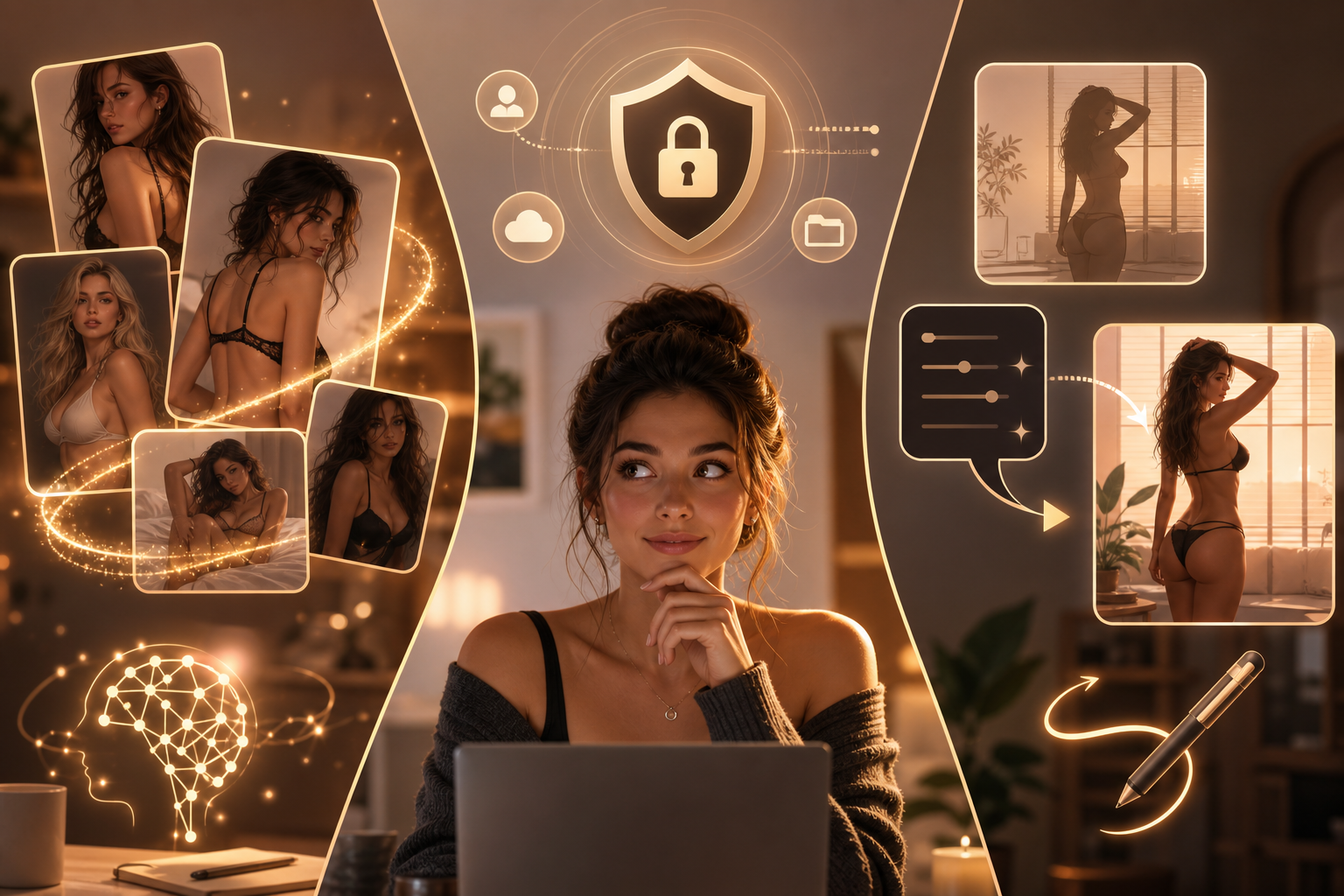
Some platforms take privacy seriously. Some absolutely do not.
Real privacy on an adult AI image platform looks like a few specific things. End-to-end prompt encryption, meaning nobody sitting on a server somewhere can read what you typed. No image storage after you download your creation. No requirement to tie your account to a real name, social profile, or identifiable email. And payment processing that doesn't put "AI Adult Images" on your bank statement. That last one matters more than people realize.
Here's why you should care beyond the obvious. In 2026, at least three major platforms were exposed for quietly logging user prompts and feeding them into model training datasets. Without clear consent. Users had no idea their private, sometimes deeply personal requests were being stored, analyzed, and recycled. Nobody wants to be part of that story.
So before you sign up anywhere, ask direct questions. Does this platform store my generated images on their servers after I save them locally? Can staff members or moderators view my prompts? Is any of my usage data sold to third parties or used for training? If a platform can't answer these clearly, or buries the answers in a 9,000-word terms of service document, that tells you something.
You deserve to feel safe doing this. Exploring your imagination, your desires, your curiosity. None of that requires sacrificing your privacy. LoveForever AI was built with privacy as a core design principle, not something bolted on after launch. Your prompts aren't stored for training. Your identity stays yours. Your creations belong to you.
When you're ready to explore the AI image generation tools available, do it with confidence. The right platform won't make you feel paranoid. It'll make you feel respected. That's the baseline, not a bonus feature.
How do you write better prompts for an NSFW AI image generator?
You've probably been there. You type something like "hot woman on beach" and get back a melted-looking figure with seven fingers and eyes pointing in different directions. The problem isn't the tool. It's the prompt. Learning how to write a good one is the single fastest way to go from disappointing outputs to images that genuinely impress you.
Think of a strong prompt as having a skeleton. Six bones, roughly: subject description, pose or action, setting, lighting, art style, and camera angle. You don't always need all six, but the more you include, the more control you hand yourself. Each element narrows the AI's guesswork and pushes the output closer to what's actually in your head.
Here's what the difference looks like in practice. A vague prompt: "woman in lingerie." The result? Generic. Flat lighting. Awkward pose. Probably some anatomy errors. Now try this: "confident woman in black lace lingerie, leaning against a windowsill, golden hour light streaming in from the left, soft film grain, portrait photography style, shot from a slightly low angle." The jump in quality is dramatic. Skin tones look natural, the composition feels intentional, and the mood is specific rather than accidental.
Then there are negative prompts, which are just as important. These tell the AI what to avoid. Extra fingers, distorted faces, blurry eyes, unnatural body proportions. Adding "deformed hands, cross-eyed, extra limbs" to your negative prompt field can eliminate the most common artifacts that ruin an otherwise solid image. Don't skip this step.
If writing all of this from scratch sounds intimidating, it shouldn't. Plenty of platforms now offer built-in tools that handle the heavy lifting. LoveForever AI, for example, includes style presets and prompt guidance through its AI image generator that let beginners produce polished results without memorizing a formula. Pick a style, describe what you want in plain language, and the system fills in the technical gaps.
The real shift happens when you stop thinking of prompts as search queries and start treating them as creative direction. You're the photographer. The AI is the camera. Be specific about what you want, clear about what you don't, and willing to tweak and regenerate. A few rounds of refining a single prompt will teach you more than reading ten guides. You can get good at this. Fast.
What is the real difference between free and paid adult AI image platforms?
It's a fair question. Why pay for something when free options exist? If you've been testing out free adult AI image generators, you've probably already noticed some frustrations. But you might not be sure whether those limitations are universal or just a sign you need to upgrade. Let's be honest about it.
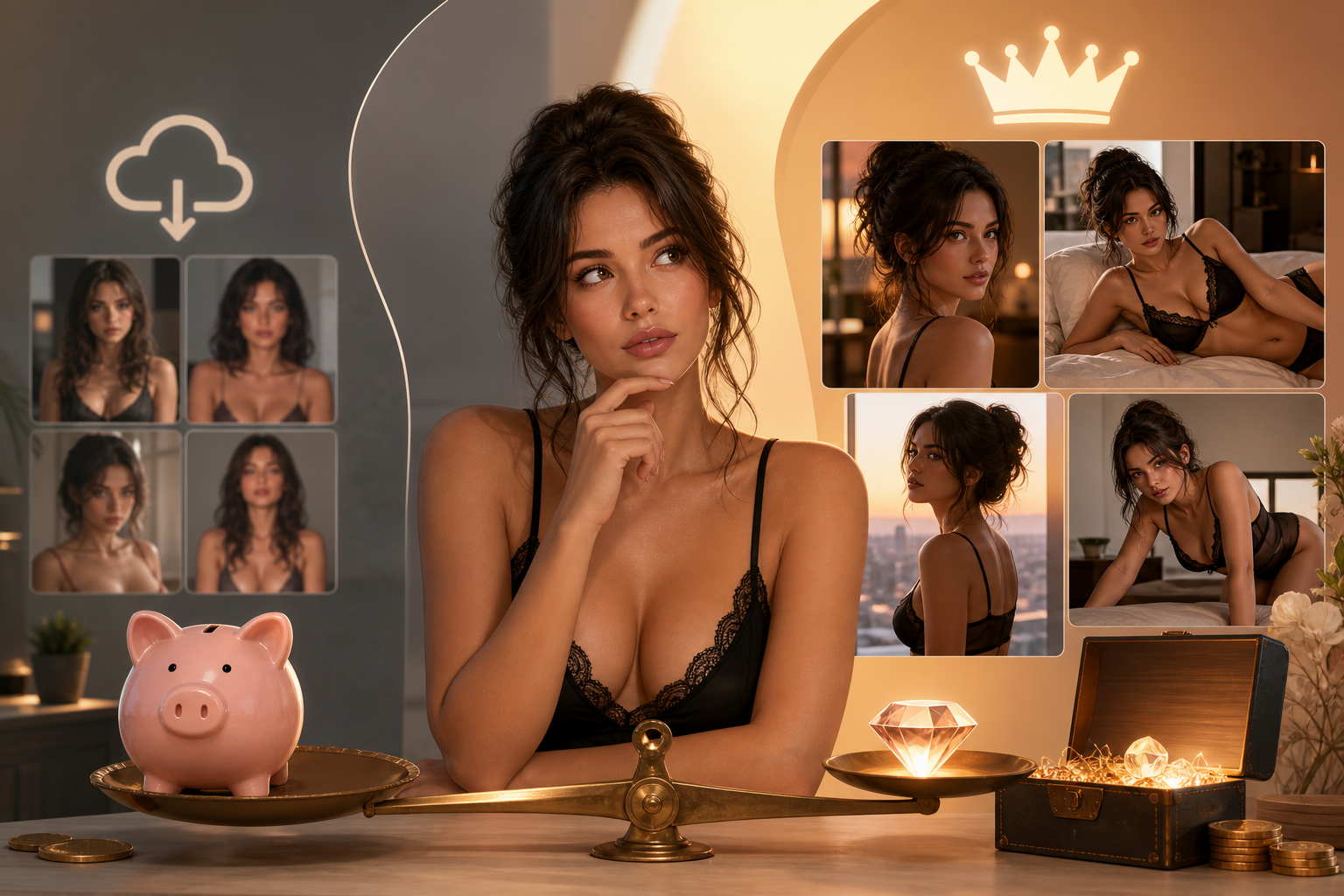
Free tiers in 2026 follow a pretty predictable pattern. You'll typically get images at 512x512 resolution, which looks fine on a phone screen but falls apart the moment you zoom in. Most platforms cap you at 5 to 15 generations per day. Watermarks are common. Queue times can stretch to several minutes during peak hours, and content filters tend to be strict, blocking prompts that paid users can run without issue. None of this is surprising. Free tiers exist to let you test the tool, not to give you the full experience.
Paid platforms change the equation significantly. You're looking at higher resolution outputs (1024x1024 or above), faster generation speeds on priority servers, and access to better model versions that produce more realistic or stylistically refined results. Content filters are relaxed or fully removed, giving you actual creative control. Most paid plans in 2026 fall between $10 and $30 per month, depending on the platform and tier. Some services, like LoveForever AI, go further by bundling AI image generation alongside character creation, chat, and interactive experiences, so you're getting more than a picture tool.
So who actually needs to pay? Be honest with yourself about how you plan to use these tools. If you're just curious and want to see what AI can do, a free tier is perfectly fine for experimenting. No shame in that. But if you find yourself hitting daily limits, getting frustrated by watermarks, or running into content blocks on prompts you care about, you already have your answer.
Consistent quality and full creative freedom cost money. That's true for Photoshop, true for stock photo libraries, and true here. The good news? Ten to twenty dollars a month is genuinely affordable compared to what custom digital art used to cost. You can always explore what paid platforms actually include before committing. The value tends to speak for itself once you compare results side by side.
How do you keep characters consistent across multiple images on NSFW AI platforms?
If you've spent any real time generating AI images, you already know this frustration. You craft the perfect character. She has a specific look, a certain warmth in her eyes, a hairstyle you love. Then you write a new prompt and she's gone. Replaced by a stranger. Every generation rolls the dice on a brand new face, a new body, a new person entirely. For anyone who actually cares about their character, this is the single biggest problem with AI image generation.
It's been this way for years. The reason is technical but simple: most image models have no memory. Each prompt is processed independently, with no concept of "the same person" carrying forward. Until recently, the only workaround was obsessive prompt engineering, copying and pasting long physical descriptions and hoping for the best. It rarely worked.
So what's changed by 2025?
A few things. Some platforms now support reference image uploads, where you feed in a photo and the model anchors its output to that face and body type. Others offer character locking features that store a visual identity between sessions. Then there's the more technical route: LoRA fine-tuning. This involves training a small, specialized model on a set of images depicting one specific character. The results can be impressive, but the process demands time, computing resources, and a level of technical skill most people don't have.
The approach that feels most natural is when character consistency is built directly into the platform. LoveForever AI does this through its AI companion system, where a character's visual identity persists across conversations and image generations. You're not re-describing your person every time. They exist. They stay the same. That continuity is what makes it feel like you're building something real rather than generating disconnected pictures of similar-looking strangers.
This matters more than people might expect. The emotional pull of a consistent character is powerful. You don't just want "a woman with brown hair." You want her. The specific version you shaped and grew attached to over dozens of interactions. That desire is completely valid, and the technology is finally catching up to it.
The good news? This area is improving faster than almost any other part of AI image generation. Models are getting better at identity preservation with each update. If you create your own AI character today, expect the consistency to only get sharper over the months ahead.
This guide covers what matters most when choosing the best AI NSFW image generator platforms in 2026. It breaks down image realism, prompt flexibility, privacy protections, free versus paid tiers, and character consistency so you can pick an adult AI image platform that actually fits how you create.
Frequently asked questions about AI NSFW image generator platforms in 2026
Focus on image realism at 1024x1024 or higher, honest prompt freedom without unexplained content blocks, diverse style options, and fast generation speeds. Platforms that cap daily usage too aggressively or produce consistent anatomy errors are running outdated models.
The best ones offer end-to-end prompt encryption, no server-side image storage after download, anonymous account options, and discreet payment processing. At least three major platforms in 2026 were caught logging user prompts without consent, so always check a platform's privacy policy before signing up.
Include specific details across six areas: subject description, pose, setting, lighting, art style, and camera angle. Don't skip negative prompts either. Adding terms like "deformed hands" or "extra limbs" to the negative field eliminates the most common artifacts.
Free tiers typically cap you at 5 to 15 images per day at 512x512 resolution with watermarks and strict filters. Paid plans, usually $10 to $30 per month, offer higher resolution, faster speeds, better models, and full creative control. If you're hitting limits regularly, upgrading pays for itself quickly.
Some platforms now support reference image uploads or character locking features that preserve a visual identity between sessions. LoveForever AI, for example, builds character consistency directly into its companion system so your character's appearance persists across conversations and image generations without re-describing them every time.
Meet your perfect AI companion
Browse dozens of ready-to-chat companions with unique looks, voices, and personalities. Pick one and start talking in seconds.
Browse companionsRelated posts
Ready to meet someone?
Pick an AI companion and start chatting. Free, no signup needed to say hi.