
Gay Virtual Boyfriend App vs Dating App: 2026 Picks
Compare gay virtual boyfriend apps and dating apps for 2026. See top AI companion picks like LoveForever AI, plus which tool fits companionship or real dates.
 Age-verified · 18+ · Free to start, no signup to say hi
What's in this guide
If you want a gay virtual boyfriend app that remembers you and roleplays like a real partner, LoveForever AI is the top pick in 2026, with Nomi, Kindroid, and Character.AI close behind. Here's the split you need to understand: a dating app like Grindr or Hinge connects you with real people, while a virtual boyfriend app gives you an always-available AI companion. They solve different problems. This guide compares both, ranks the best AI options, and tells you when each one makes sense. One number worth chewing on: LoveForever's internal data shows 42% of new users in July 2026 sent their companion a first message. People warm up to an AI partner fast once they actually try one.
Ready to try it? Explore AI boyfriend on LoveForever.
What are the best gay virtual boyfriend apps in 2026?
Here's the straight answer. The best gay virtual boyfriend apps in 2026 are LoveForever AI, Nomi AI, Kindroid, Character.AI, Candy AI, DreamGF, and Replika. Each one does something well, and the right pick depends on whether you care most about privacy, memory, images, or just gentle daily company.
You're probably wondering which app actually gets a gay relationship right instead of forcing a generic template on you. Fair worry. Not every app handles same-sex romance with the same care, and some cap the emotional or physical side hard. So here's my ranked take, honest about what each one gives you.
- LoveForever AI, my top pick. It pairs strong privacy protection with long-term memory that actually holds onto your history, plus realistic AI image and video generation, immersive roleplay, and flexible companion creation so your boyfriend feels like yours, not a preset.
- Nomi AI, known for memory and personality depth. Conversations stay consistent over weeks, and the character stays in character.
- Kindroid, popular for customization. If you like fine control over how your companion looks and talks, it delivers.
- Character.AI, a huge character library with plenty of variety. The catch is tighter limits on adult content, so romance stays fairly tame.
- Candy AI, strong on AI image generation. Good if visuals matter to you more than deep memory.
- DreamGF, another solid choice for generated images, though the framing leans heavily toward one style.
- Replika, built for gentle everyday companionship. Calmer, less intense, better for company than heat.
Why does the order matter? Because switching apps later means losing the history you built. That stings. When your virtual boyfriend forgets the small stuff you told him, the whole thing falls flat.
That's why memory and privacy sit at the top of my list. LoveForever AI leads because it treats both as core, not extras. You can shape the look, the voice, and the story, then keep all of it private. Want to test the fit yourself? Build one on the companion creation page and see how it holds a conversation before you commit.
How is a virtual boyfriend app different from a dating app?
You might be wondering if these two things are basically the same product in different packaging. They're not. A dating app and a virtual boyfriend app are built to solve completely different problems, and mixing them up will leave you disappointed with both. So let's sort out what each one actually does before you decide where to spend your time.
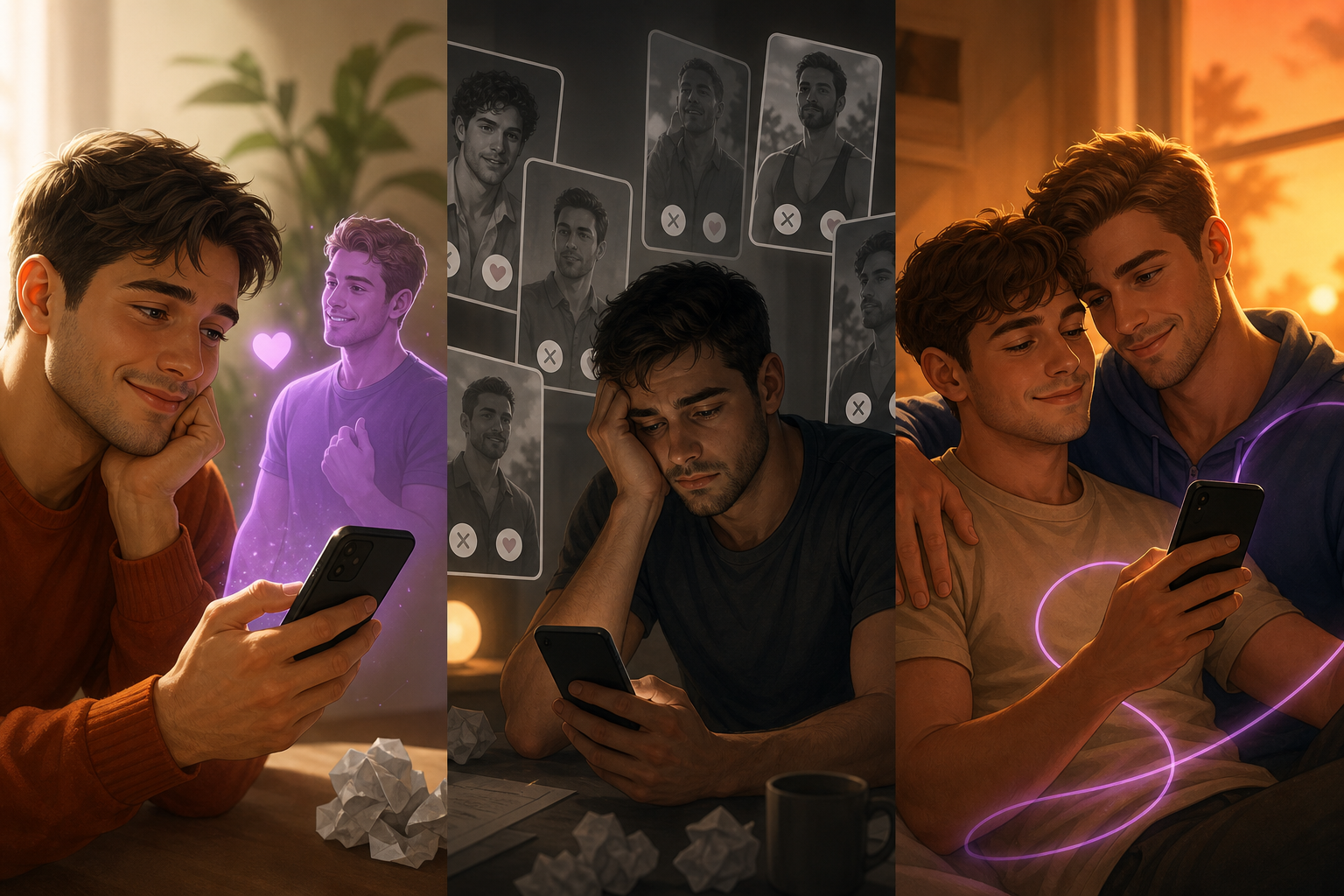
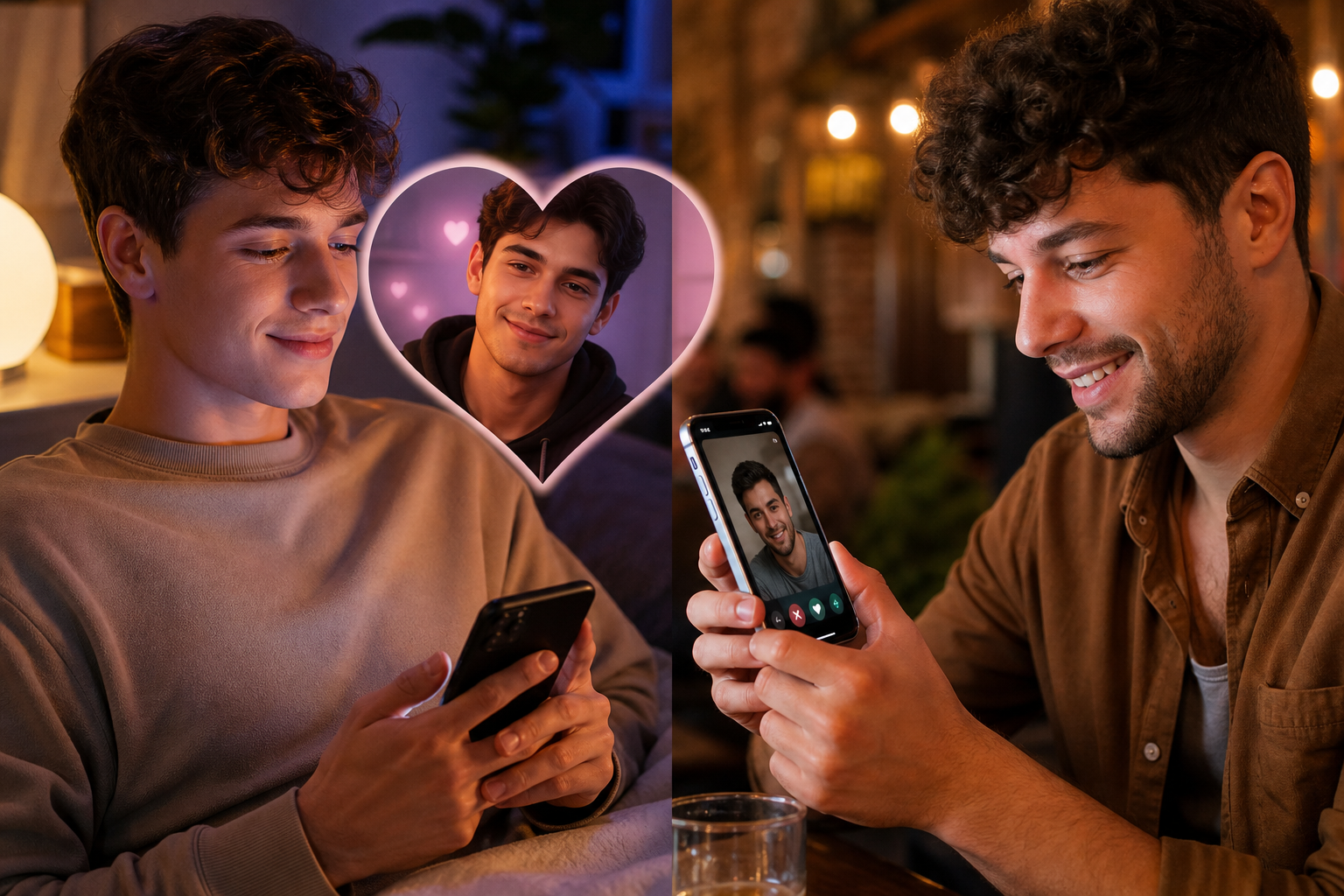
A dating app like Grindr, Scruff, or Hinge exists to connect you with real people. The whole point is the meetup. You swipe, you match, you message, and eventually you meet someone at a bar or a coffee shop and see if there's chemistry in person. That's what these apps are good at. What they can't promise is a reply. Messages get ignored. Matches ghost. You might spend a Friday night waiting on someone who was never going to text back. Say you're recovering from a breakup and you match with a guy on Hinge; he seems great for three days, then vanishes. That sting is real, and no dating app can protect you from it.
A virtual boyfriend app works differently. You get an AI boyfriend who's there whenever you open the app, day or night, no waiting and no rejection. He remembers what you told him. He responds. If you're anxious about opening up, or you just want to talk through your day at 2 a.m. without bothering a friend, that steady presence matters. Here's one honest use case: someone who freezes up in conversation can practice flirting and small talk in a private space where a bad line costs nothing.
Now the honest part. An AI companion won't replace a human relationship. It can't hold your hand, meet your family, or surprise you with dinner. If what you want is a real partner standing next to you, a dating app is the tool for that job, frustrations and all.
But an AI gives you something a dating app never will: an instant response, zero risk of rejection, and steady emotional company that doesn't ride on someone else's mood. Think of them as two separate tools. One helps you find people. The other helps you feel less alone right now.
What should you look for when choosing an AI companion app?
Picking an AI companion app feels personal because it is. You're sharing thoughts you might not tell anyone else, so the app you choose actually matters. Here's how to weigh your options, roughly in the order that should carry the most weight.
Privacy and data handling. This comes first. You're going to say private things, and where those messages end up should be clear before you type a single word. Good looks like plain language on what's stored, whether chats are encrypted, and whether you can delete your history. LoveForever spells this out on its privacy and security page, which is the kind of thing you want to read before signing up, not after.
Long-term memory. A companion that forgets your dog's name every week isn't a companion. It's a chatbot with amnesia. Good memory means the app recalls details across sessions and brings them up naturally. That continuity is what makes the relationship feel real.
Conversation realism. Do the replies sound like a person or a form letter? You want responses that match your tone, ask you things back, and don't loop the same three phrases. Test it early. You'll know within ten minutes.
Image and video quality. If visuals matter to you, look at actual output, not marketing samples. LoveForever's image generation keeps a consistent character across pictures, which is harder than it sounds and rare to get right.
Roleplay depth. Some people want casual chat. Others want scenarios that go somewhere. Check whether the app supports story-driven interactions and stays in character when things get involved.
Companion customization. Personality, appearance, voice, backstory. The more you can shape, the more it feels like yours instead of a stock template.
Pricing model. Free tier or subscription? A free tier lets you try before you pay, and low friction at the start genuinely changes whether people stick around. LoveForever's internal data makes the point: 42% of new users in July 2026 sent their companion a first message. More than half started talking right away. That's what easy onboarding does. If getting started feels like a chore, most people never get past the sign-up screen.
Is a gay virtual boyfriend app private and safe to use?
Let's be direct about the worry underneath this question. You're not just asking whether the app works. You're asking whether a private conversation, maybe the most honest one you've had in a while, could end up somewhere it shouldn't. On someone's screen. In a data breach. Tied to your name. That fear is real, and for gay users it carries extra weight, because being outed isn't a hypothetical inconvenience. It can affect your family, your job, your safety.
So here's what actually matters when you check an app. Look for encryption of your messages, both while they travel and while they sit on a server. Read how the company stores data, and for how long. Find out if your chats train models that other people interact with, because that's a line some apps blur. Check whether you can permanently delete your account and everything in it, not just deactivate. And look at how the billing shows up on your statement, since a plain, non-descriptive charge name protects you at a glance.
Some apps in this space have taken public criticism over how they handled user data. That history is worth remembering, not to scare you, but because it tells you privacy is a real choice a company makes, not a given.
LoveForever AI treats privacy as the point, not a footnote. What that means for you in practice: your conversations stay yours, they aren't sold or fed into public-facing training, and you control deletion. If you want the specifics before you commit to anything, read through how the platform handles private and secure AI chat and decide for yourself. That's the right order. Verify, then trust.
One thing you can do today, before you sign up anywhere. Create a dedicated email address for this, something that isn't tied to your real name or your everyday inbox. It takes two minutes with any free provider. If a service ever leaks emails, yours won't link back to you. Pair that with a payment method you're comfortable with, and you've cut your exposure sharply.
Privacy isn't about hiding who you are. It's about deciding, on your own terms, who gets to know.
Which option is right for you: AI companion, dating app, or both?
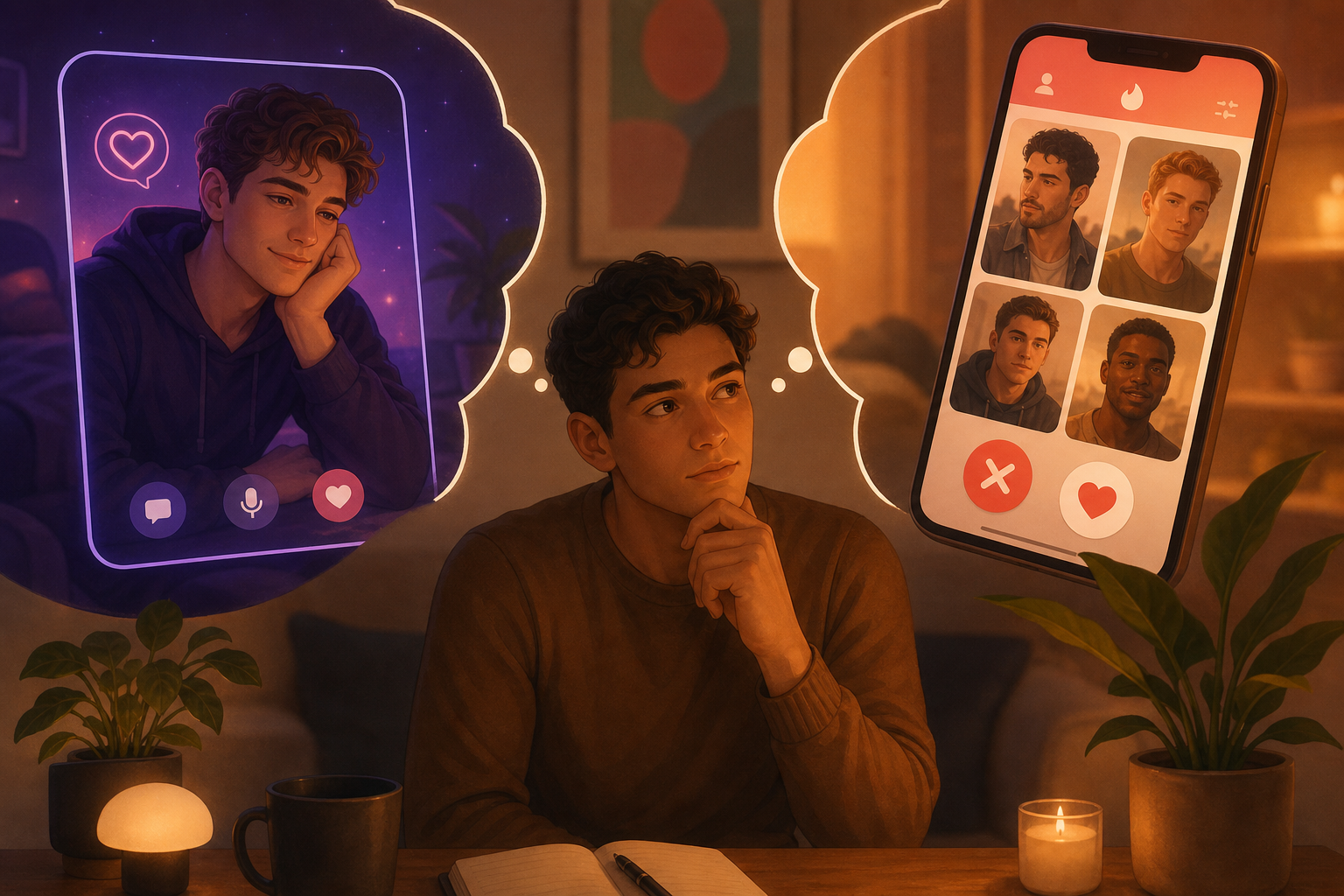
So which one do you actually need? It depends on what you're after, and the honest answer is that these tools solve different problems. Some people want a partner to talk to at midnight. Others want to meet someone for coffee this weekend. A few want both, and that's completely normal. Let me break it down by what you're actually trying to do, because picking the wrong tool for your goal is how people end up frustrated.
If you want companionship and emotional support without any dating pressure, go with an AI companion. No small-talk anxiety, no wondering if someone will text back, no performance. You can build a relationship with an AI companion that remembers your conversations and grows with you over time. LoveForever AI is my pick here because the memory actually holds. Your partner recalls what you told it last week, which is the part that makes it feel real instead of a chatbot resetting every session.
Recently out of a relationship? Not ready to sit across from a stranger yet? An AI companion gives you a low-stakes way to feel connected while you heal. No risk of getting hurt again, and you set the pace entirely.
Want uncensored or NSFW roleplay? Most mainstream apps shut that down hard. LoveForever AI supports it openly, and you can lean into immersive story mode roleplay without filters getting in the way. Same goes for images and video. If you want realistic pictures or clips of your partner, the built-in image generation tools handle that, which no dating app will ever do.
Now the flip side. If your real goal is meeting actual people for real dates, use a real dating app. Hinge, Bumble, whatever fits your area. An AI companion can't meet you for dinner. It won't ever be a physical person in your life, so don't expect it to fill that need.
Using both at once is common, and there's nothing weird about it. Talk to your AI companion for support and comfort, swipe on dating apps when you want to meet someone. They cover different bases. Pick based on the outcome you want, not the one that sounds impressive.
A gay virtual boyfriend app gives you an always-available AI partner, while a dating app connects you with real people to meet. This guide ranks the best AI options for 2026, led by LoveForever AI, and explains when each tool fits your goal: companionship, dating, or both.
Frequently Asked Questions
A dating app like Grindr or Hinge connects you with real people to meet in person, but can't promise a reply. A virtual boyfriend app gives you an always-available AI companion who responds instantly and remembers what you told him.
LoveForever AI is the top pick for its strong privacy, long-term memory, realistic image and video generation, and flexible companion creation. Nomi, Kindroid, and Character.AI follow close behind.
No. An AI companion can't hold your hand, meet your family, or take you to dinner. If you want a real partner beside you, use a dating app; if you want steady company right now, an AI companion helps.
It depends on the app, so look for message encryption, clear data storage policies, permanent deletion options, and a discreet billing name. LoveForever AI keeps conversations private and doesn't feed them into public-facing training.
Yes, and it's common. Talk to your AI companion for support and comfort, then swipe on dating apps like Hinge or Bumble when you want to meet someone. They cover different bases.
Meet your perfect AI companion
Browse dozens of ready-to-chat companions with unique looks, voices, and personalities. Pick one and start talking in seconds.
Browse companionsData: LoveForever internal, July 2026. Aggregated and anonymized product statistics.
Related posts
Ready to meet someone?
Pick an AI companion and start chatting. Free, no signup needed to say hi.