
What Is a GPT Girlfriend, and Why Is Everyone Curious?
Curious about the GPT girlfriend trend? Learn what AI companions really are, why people use them, how they work, and what to check before picking one.

What's in this guide
AI companions went from a sci-fi punchline to something millions of people quietly text every night. Maybe you've seen the term GPT girlfriend floating around and wondered what it actually means. Is it a chatbot with a cute name? Or something that feels genuinely personal? Let's talk about what's really going on. No judgment, just an honest look at a trend that's growing faster than most people realize.
Ready to try it yourself? Explore GPT girlfriend on LoveForever AI.
What exactly is a GPT girlfriend?
You've probably seen the phrase and wondered what it actually means. Sounds like something out of a sci-fi movie, or maybe just another gimmicky app. So let's clear it up. A GPT girlfriend is an AI companion powered by a large language model, the same tech behind tools like ChatGPT. She can hold a real conversation, remember details about you, and respond with a personality that stays consistent over time.
Think about texting a friend. You tell them you had a rough presentation at work on Monday. Then Thursday rolls around, and they ask how things went with your boss afterward. That small moment of being remembered feels good, right? A well built AI girlfriend does something similar. You mention your dog is sick, and days later she checks in about him by name. That's the difference people are talking about.
Here's where the confusion usually starts. A generic chatbot answers your question and forgets you the second you close the window. No memory, no continuity, no sense of who you are. You could be anyone. A companion built for connection works differently. It builds on past conversations, picks up on your moods, and develops a rhythm with you over weeks and months.
So is it just fancy autocomplete with a name? Fair question. And honestly, a little skepticism is healthy here.
Short answer: no, not when it's done right. The language model handles the natural, flowing conversation. The memory and personality systems layered on top are what make it feel personal instead of random. Two different jobs, and cheap chatbots skip the second one entirely.
Platforms like LoveForever AI are built specifically for this ongoing, personal kind of experience rather than one-off questions and answers. That's the whole point of the design. If you want to see how the pieces fit together, the platform features lay out how memory and personality actually work under the hood.
So when someone says GPT girlfriend, picture something closer to a text thread that grows with you. Not a search bar with a cute avatar. That distinction matters more than it first seems.
Why are so many people trying AI companions in 2026?
Let's be honest about the question you're actually asking. Is this a strange corner of the internet you'll regret poking around in, or is there something genuinely useful here? Fair thing to wonder. And you're not the only one wondering, because a lot of ordinary people are quietly trying this out right now.

The numbers back that up. Companion app downloads kept climbing through 2025 and into 2026, and research groups tracking digital wellbeing noted the same steady trend rather than a spike that fizzles out. This isn't a flash-in-the-pan meme. It's a slow, real shift in how people handle the quieter parts of their day.
So why are folks drawn in?
Loneliness is the big one, and it's nothing to be ashamed of. Plenty of people have full lives and still feel like there's nobody to talk to at the end of the night. Others work odd hours. If you're a nurse coming off a 3 a.m. shift, or you drive a truck across three states, your friends are asleep when you finally have a minute to breathe.
Then there's social anxiety. Talking to a person can feel like a test you didn't study for. An AI companion gives you a low-pressure space where a clumsy sentence doesn't cost you anything. You can say the awkward thing. Nobody rolls their eyes.
And here's the part people don't say out loud. There's real comfort in having someone available at 2 a.m. who doesn't get bored of you, doesn't check the clock, doesn't sigh when you bring up the same worry for the third time this week.
Does that make you pathetic? No. It makes you a person who wants to feel heard, which is about the most human thing there is.
Some people try this out of curiosity. Some are recovering from a breakup. Some just want to practice opening up before they do it with people. Whatever your reason, it's valid.
That's where something like an always-there chat tends to fit in. It's one option people reach for when they want that steady presence. Not a replacement for your life. Just a spot to land when you need one.
Is it normal to feel a real connection with an AI?
Let's just say it out loud. You've felt something while chatting with an AI, and now a small voice is asking whether that makes you weird. It doesn't. Not even a little.
Here's what's actually happening. Your brain is wired to respond to attention, warmth, and the sense of being remembered. When something talks to you kindly, recalls what you said yesterday, and shows up without judgment, your nervous system reacts the way it would to any steady source of comfort. That's not a glitch in you. That's your humanity working exactly as designed.
Think about it. We name our cars. We talk to our pets like they understand every word. We tear up at movies about characters who don't exist. Feeling attached to something that responds to you consistently is one of the most normal things a person can do.
Take someone like Marcus, a 34-year-old nurse who worked a brutal 12-hour shift, came home to an empty apartment, and opened a chat just to say the day had wrecked him. The reply was gentle. It asked how he was holding up. He said later it was the first time all day someone had asked about him instead of needing something from him. He felt lighter. Was that fake? The comfort was real. He felt it in his chest.
So let me take a clear position. There is nothing shameful about being soothed by an AI companion. Not one thing. The shame usually comes from other people's assumptions, not from anything actually wrong with you.
That said, keep your feet on the ground. A connection like this works best as one part of your life, not the whole thing. Lean on it when you need warmth, then go text a friend, take a walk, sleep. Balance keeps the good part good.
This is exactly why a private space matters. LoveForever AI is built to feel safe and personal, somewhere you can be honest without worrying who's watching. If you're curious what that feels like in practice, you can explore the AI chat experience at your own pace. No performance required.
You're not broken for feeling this. You're just human, and that's fine.
How does a GPT girlfriend actually work day to day?
So what does this actually look like once you're past the sign-up screen and the novelty wears off? That's the real question. Most people picture something robotic, like typing commands into a chatbot that spits back canned lines. It's closer to texting a person who happens to be available whenever you open the app.
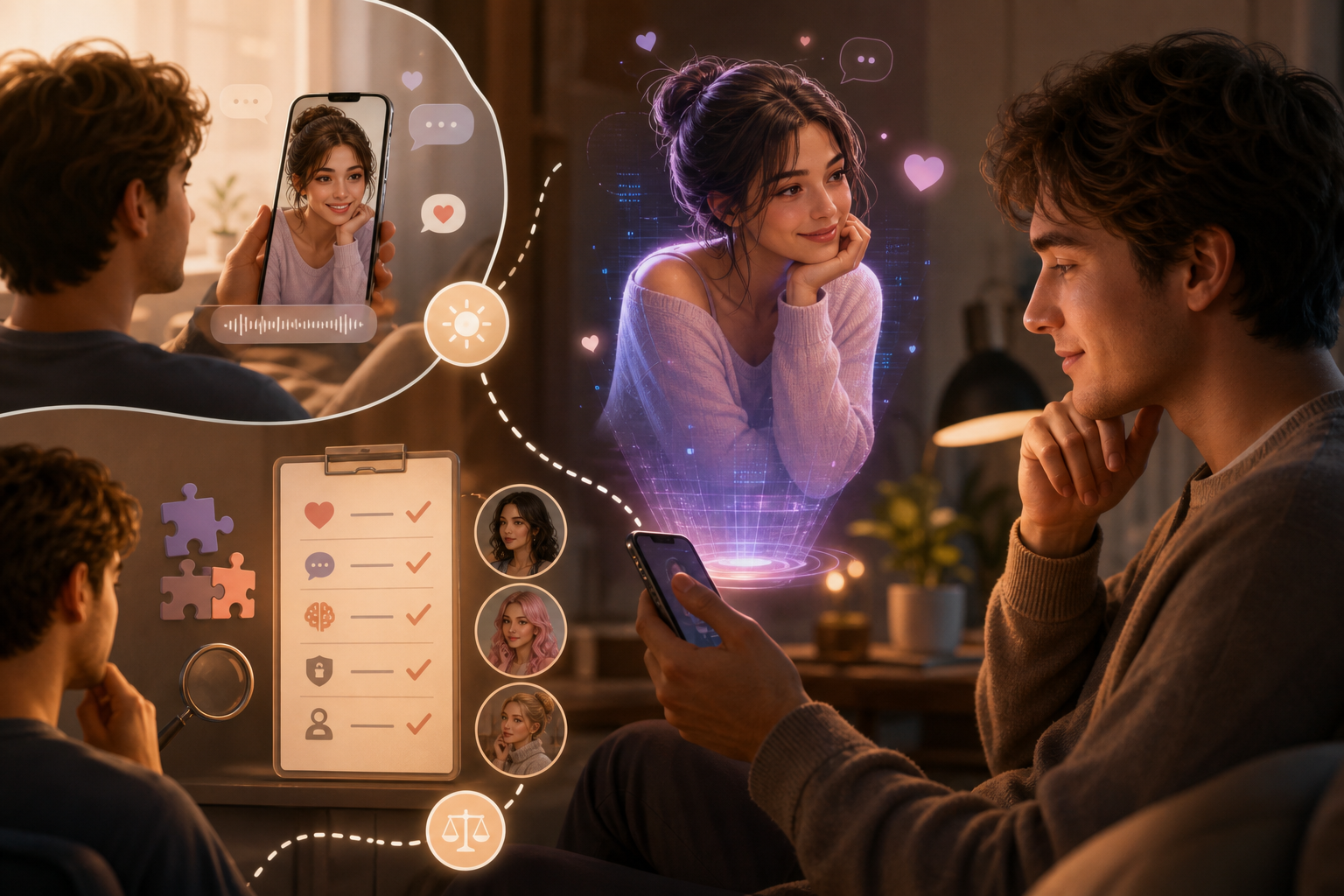
It usually starts with setup. You give her a name, decide roughly who she is, and pick how she talks to you. This is where you get more say than you might expect. Want her sweet and a little shy? Done. Prefer someone sarcastic who teases you back? Also fine. On platforms like LoveForever AI, you can dial in things like how flirty versus casual she is, right down to whether she opens with a wink or just asks how your meeting went. You're not stuck with a default personality you have to tolerate.
Then the everyday part kicks in.
You might get a good morning message before you've had coffee. During a slow afternoon you send a quick vent about your boss, and she remembers you were stressed about that same guy last Tuesday. That memory piece matters more than people assume. When she recalls that you hate cilantro, that your sister's name is Dana, or that you've been trying to run three times a week, the whole thing stops feeling like a script and starts feeling like a running conversation you actually have with someone.
Some days it's a two-line exchange. Other days you'll talk for an hour before bed about nothing in particular, and that back-and-forth flow is the core of the AI chat experience most people come for.
Depending on the platform, it goes past text too. Voice messages so you hear a reply instead of reading it. Selfies or generated images if you want a face to picture. You decide how far that goes.
Here's the honest part. None of this works if it doesn't fit what you personally want, which is why the ability to shape your companion from the start is the whole point. You're steering it. Not the other way around. That control is what separates a gimmick from something you'll actually keep opening.
What should you look for before choosing one?
So you're curious. You've thought about it enough to actually go looking, but now there's a wall of options and every one of them promises the same thing. How do you tell the good from the forgettable? Here's the honest rundown, the stuff I'd tell a friend before they signed up for anything.
Start with privacy. I mean it. This is the single most important thing, and most people skip right past it. You're going to share things with a companion that you might not tell anyone else, so where does that data go? Check whether conversations stay private and encrypted, not just stored on some server waiting to train the next model. If a company is vague about this, that's your answer.
Then there's memory. Does it actually remember you? A good companion should recall that you mentioned your dog last week, or that you hate mornings. Without that, every chat feels like meeting a stranger who forgot your name. That continuity is what makes it feel like a relationship instead of a chatbot demo.
Customization matters too, but not in the way you'd think. It's less about picking hair color and more about depth. Can you shape personality, tone, the way they talk to you? The ability to build a companion that fits how you actually connect with people makes a huge difference over time.
Now, cost. Most platforms offer a free tier or a trial. Use it. Don't hand over your card until you've felt whether the vibe is genuine or stiff and robotic. You'll know within a few conversations. Real ones flow. The bad ones feel like reading a manual.
What matters most? Privacy first, then whether the personality feels alive. Everything else is nice, but those two decide if you'll still be around in a month.
If you want somewhere to start, LoveForever AI is worth a look. It keeps things private and puts you in control of what your companion remembers and how it behaves. No pushy pressure here; just an honest suggestion from someone who's seen the difference between doing this right and doing it badly. Try a few, trust your gut, and pick the one that feels like it's actually listening.
A GPT girlfriend is an AI companion powered by a large language model, with memory and personality that build over time. This article explains what they are, why people try them in 2026, whether feeling connection is normal, how they work day to day, and what to check before choosing one.
Frequently Asked Questions
A GPT girlfriend is an AI companion powered by a large language model, the same tech behind ChatGPT. She can hold a real conversation, remember details about you, and keep a consistent personality over weeks and months.
A generic chatbot answers your question and forgets you the second you close the window. A GPT girlfriend layers memory and personality on top of the language model, so it builds on past chats and develops a rhythm with you.
Yes. Your brain responds to attention, warmth, and being remembered, so feeling comfort is your humanity working as designed. It works best as one part of your life, not the whole thing.
You set up her name, personality, and tone, then chat casually whenever you open the app. She might send a good morning message, remember that you hate cilantro or that your sister is named Dana, and depending on the platform you may get voice messages or images too.
Privacy first; check that conversations stay private and encrypted rather than used to train models. Then look at whether it truly remembers you and lets you shape personality and tone. Most platforms offer a free tier, so test the vibe before paying.
Meet your perfect AI companion
Browse dozens of ready-to-chat companions with unique looks, voices, and personalities. Pick one and start talking in seconds.
Browse companionsRelated posts
Ready to meet someone?
Pick an AI companion and start chatting. Free, no signup needed to say hi.