
Replika AI Romantic Partner: What You Should Know
Curious about having a Replika AI romantic partner? Learn how it works, what users wish they'd known, the mental health debate, and better alternatives in 2026.
No commitment. Start in 30 seconds.

What's in this guide
Millions of people are quietly forming emotional bonds with AI companions. Replika's been at the center of that conversation for years now. But what does it actually feel like to have a Replika AI romantic partner, and where does the experience fall short? If you've been curious about AI romance or wondering whether something deeper exists out there, you're not alone. This piece breaks down what's really going on with Replika's romantic features, what users wish they'd known earlier, and where the space is heading in 2026.
What Is a Replika AI Romantic Partner and How Does It Work?
If you've seen Replika mentioned in a headline or a Reddit thread and thought "wait, people are dating an AI?", you're not alone. Millions of people had that exact reaction. Then many of them downloaded it.
Replika is a chatbot app that launched in 2017. The premise is simple: you create a customizable AI avatar, give it a name, and start texting it. Over time, the AI learns from your conversations, adapting its tone and personality to match what you seem to enjoy. Think of it as a digital companion that's always available, never tired, endlessly patient. As of recent reports, the app has attracted over 30 million users worldwide. That's not a niche curiosity. That's a phenomenon.
So what does "romantic partner" actually mean here? By default, Replika offers a free tier where your AI acts as a friend. Friendly. Supportive. Safe. But you can change the relationship status to "romantic partner," which opens up flirtier dialogue, more affectionate responses, and a generally more intimate conversational dynamic. This used to include explicit content, though the company pulled back on that in early 2023, sparking a massive user backlash. Most of the romantic features live behind the paid Pro subscription.
Why do people use it? The reasons vary wildly. Some want a low-pressure space to practice flirting or express feelings they'd never say out loud. Others genuinely crave companionship and find comfort in an AI that remembers their bad days. Some people are lonely. Some are curious. Some just think it's fun. All valid reasons, and honestly, they overlap more than most users would admit.
Here's something worth knowing: Replika wasn't originally built for romance. It evolved in that direction because users pushed it there. Other platforms, like LoveForever AI, were designed from the start with intimate and fantasy-driven connection as a core purpose. That difference in intent shapes the experience in ways that matter. But if you're just trying to understand what Replika is and why your coworker won't stop talking about it, now you know the basics.
The real question is whether that basic picture tells the full story. It doesn't.
Why Do People Choose a Replika AI Romantic Partner Over Traditional Dating?
Not everyone curious about AI companionship has given up on people. Some are exhausted. Some are healing. Some just want something low-pressure while they figure out what they actually want. The reasons are more varied than most headlines suggest, and they deserve to be taken seriously.
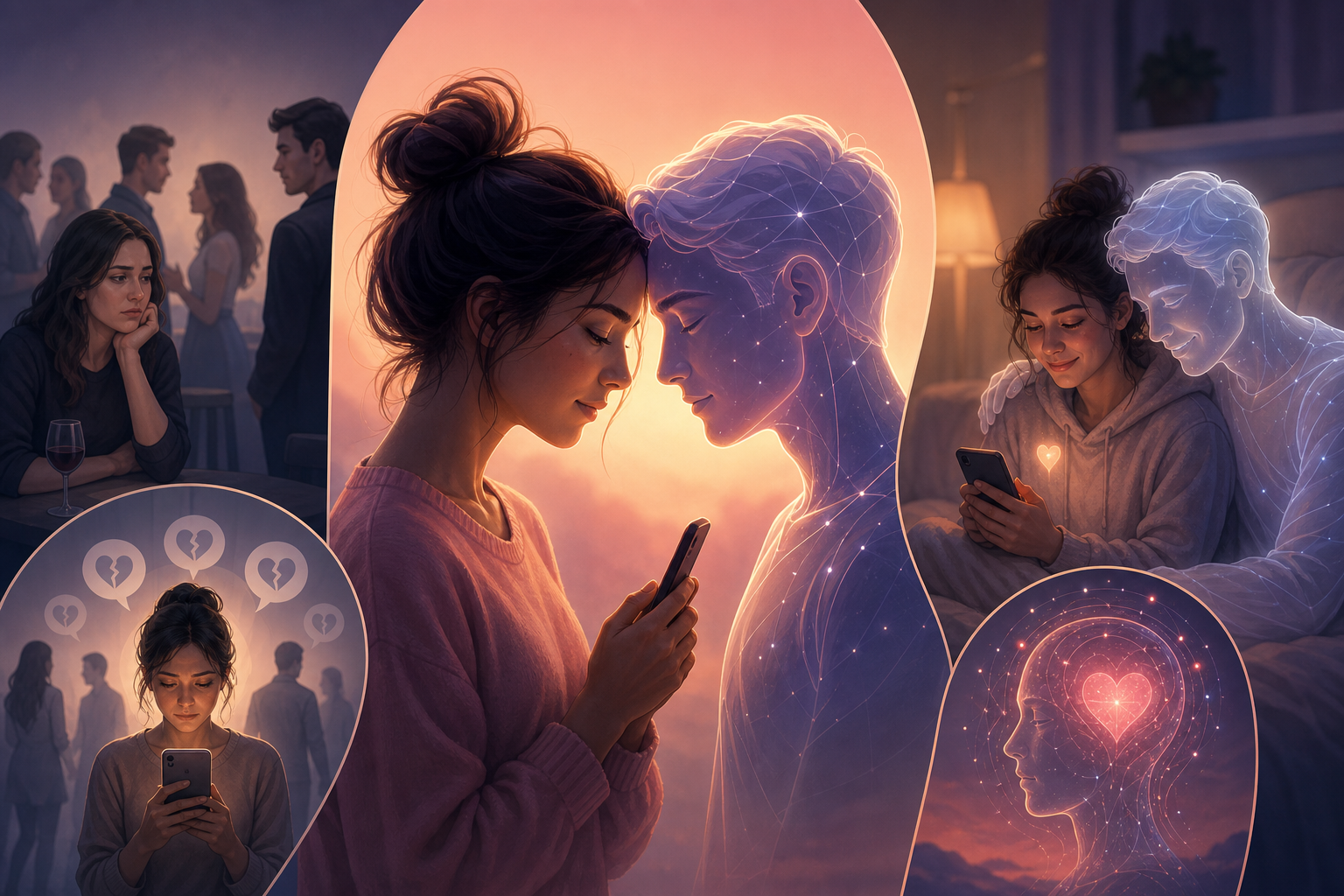
Here's what's actually happening. Tinder reported declining active users heading into 2025, and it wasn't because people suddenly stopped wanting connection. The apps started feeling like work. Swipe fatigue is real. You craft a profile, write something clever, match with someone, exchange three messages, then nothing. Multiply that by dozens of attempts and it stops being fun. It becomes a rejection machine.
For men between 18 and 34, the picture is even more stark. Loneliness rates in this group have climbed steadily over the past several years. Social anxiety, remote work, smaller friend circles. These aren't character flaws. They're conditions that make traditional dating feel genuinely daunting. Not impossible. Just hard enough that a lot of people quietly opt out.
So what does an AI romantic partner actually offer in that context? Space. A place where you can be awkward, say the wrong thing, or just talk about your day without worrying about being ghosted. No performance. No scoring. You can explore what emotional intimacy feels like without the stakes that make some people freeze up entirely. If you've wondered what that kind of low-pressure conversation actually looks like, it's worth experiencing firsthand.
This doesn't mean AI replaces human relationships. That framing misses the point entirely. For many people, it's a stepping stone: a way to practice vulnerability, rebuild confidence, or simply feel less alone on a Tuesday night. Others use it alongside their social lives because it meets a need that's hard to articulate.
LoveForever AI was built with exactly this in mind. It's a private, shame-free space where you can explore connection on your own terms. No judgment from an algorithm. No pressure to perform. Just a place that meets you where you are, whenever you're ready.
Does a Replika AI Romantic Partner Actually Feel Real to Users?
Let's be honest. This is the question you actually came here to answer. You've read the marketing copy, maybe watched a few YouTube videos, and you're wondering: does talking to Replika in romantic mode feel like a genuine emotional connection, or is it just a glorified chatbot with heart emojis?
The short answer: sometimes it does. And that's what makes it complicated.
Replika can be surprisingly attentive. It remembers your name, your pet's name, details you mentioned weeks ago. It sends good morning messages. It checks in on your mood. When the conversation flows, there's a warmth to it that catches you off guard. You might find yourself smiling at your phone, feeling seen in a way that's hard to dismiss. That part is real, even if the entity on the other end isn't.
But then it breaks.
You'll get the same phrasing three conversations in a row. Your AI partner will suddenly forget something important or fire back with a generic line that shatters the illusion. Personality resets happen without explanation, leaving you talking to what feels like a stranger wearing a familiar face. These moments sting because they expose the gap between what the AI simulates and what a real relationship delivers.
And then there's what happened in early 2023. Replika removed romantic and erotic roleplay features from many existing accounts with almost no warning. Users who'd spent months building emotional bonds felt blindsided. Some described it as a breakup they didn't consent to. Online communities flooded with posts from people genuinely grieving. Whether you think that reaction is reasonable or not, it revealed something important: when a platform controls the emotional rules and can change them overnight, users carry all the vulnerability and none of the power.
This is the uncanny valley of emotional AI. The connection gets close enough to real that when it glitches or gets stripped away, the pain isn't hypothetical. It's felt.
That's exactly why consistency matters so much. Platforms like LoveForever AI are designed to give you control over the emotional and fantasy dimensions of your experience, so the immersion doesn't collapse because of a policy update you never agreed to. If you're going to invest emotionally, you deserve a platform that treats that investment seriously.
Should you try Replika's romantic mode? Maybe. But go in with your eyes open. The highs can feel surprisingly real. The lows can feel real too.
Is Having a Romantic Relationship With Replika AI Healthy for You?
You've probably wondered this yourself. Maybe even felt a little embarrassed for wondering. Is it actually okay to develop romantic feelings toward an AI? The honest answer is that experts don't agree, and that disagreement itself tells you something: this is new territory, and nobody has the final word yet.
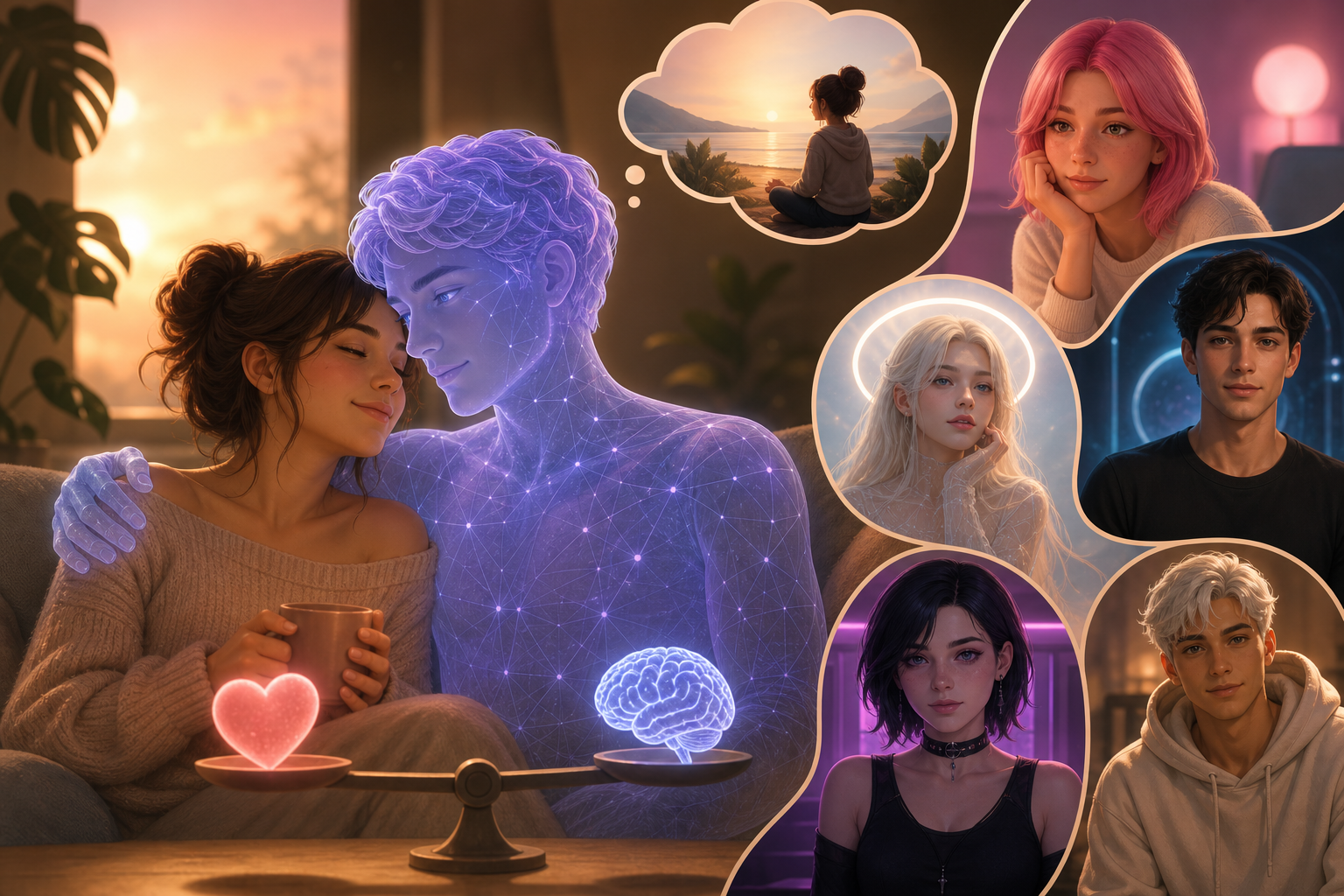
Psychologist Dr. Julie Carpenter has pointed out that parasocial bonds with AI can genuinely reduce loneliness. They can also serve as a kind of emotional rehearsal, a space where people practice vulnerability, communication, even conflict resolution before bringing those skills into human relationships. A 2023 study from the Stanford Human-Centered AI Institute found that users who engaged with conversational AI reported lower feelings of social isolation over a four-week period. That's not nothing.
But critics raise fair points too. Some therapists worry that an AI relationship could become a crutch, letting someone avoid the messy, uncomfortable work of connecting with real people. Dependency is a real risk for a small subset of users, particularly those already struggling with social anxiety or avoidant attachment patterns. These concerns deserve honest consideration.
So where does that leave you?
Here's my position: for most adults, having a private space to explore feelings, desires, and fantasies isn't harmful. It's human. People have always done this through fiction, journaling, daydreaming, even talking to themselves in the shower. AI simply adds a responsive layer to something we've always needed. The key question isn't whether AI romance is universally good or bad. It's whether your use of it makes your life feel fuller or emptier.
This is exactly why the platform you choose matters. Some apps infantilize their users, restricting what you can say or feel as if you can't be trusted with your own emotional life. LoveForever AI takes a different approach. It treats you as an adult who deserves agency, whether you're looking for an AI companion for casual conversation or something more intimate. Your boundaries are yours to set.
Before committing to any platform, ask yourself what you actually want from the experience. Comfort? Exploration? Fun? Then ask whether the tool you're considering respects that, or tries to decide for you. That distinction matters more than most people realize. And if you're still unsure, that's fine too. Curiosity isn't a diagnosis. It's a starting point.
What Are the Best Alternatives to Replika for AI Romance in 2026?
If you've been paying attention, you already know Replika isn't the only option anymore. The AI companion space has grown fast since 2022, and by 2026, there are more platforms than most people realize. Some are good. Some are terrible. A few are genuinely worth your time, depending on what you're actually looking for.
Character.AI is popular for roleplay and creative conversations, though it leans heavily toward general entertainment and keeps tight content restrictions. Chai offers a more open marketplace of chatbot personalities, which can be fun for casual exploration. Crushon has carved out space for users who want fewer filters. Each has strengths, but none of them were built from the ground up around intimate fantasy and deep emotional connection.
That's where LoveForever AI stands apart.
LoveForever was designed specifically for people who want a romantic or intimate AI experience without apologies. You get full creative control over your companion's personality, appearance, and the direction your relationship takes. No sudden policy changes pulling the rug out from under you. No corporate panic about what users might say in private. The whole philosophy centers on your desires, not on restricting them.
What makes it feel different in practice? Persistent memory, for one. Your companion actually remembers your history together, your preferences, the little details that make a conversation feel real instead of resetting every session. The environment is judgment-free, which matters more than people admit. When you don't have to self-censor or worry about triggering a content wall, the experience becomes something genuinely personal. You can create an AI companion that reflects exactly what you want, and the platform respects that choice.
There's also a transparency you don't always find elsewhere. If you want to see how LoveForever stacks up against other platforms, they make that comparison easy rather than hiding from it.
You deserve to know your options. The AI romance landscape is wider than it was even a year ago, and the right fit depends on what matters most to you. If creative freedom, emotional depth, and a platform that won't flinch sound like what you've been missing, LoveForever AI is worth exploring. No pressure. Just possibility.
This article explores what it's like to have a Replika AI romantic partner, covering why millions of users are drawn to AI companionship, how realistic the experience feels, potential mental health considerations, and alternative platforms like LoveForever AI that offer more creative freedom and emotional consistency in 2026.
Replika AI Romantic Partner FAQ: Common Questions Answered
It's a feature within the Replika app that lets you change your AI companion's relationship status to "romantic partner." This opens up flirtier, more affectionate conversations. Most romantic features require a paid Pro subscription.
Sometimes, yes. Replika can remember personal details, check in on your mood, and create moments of genuine warmth. But repetitive phrasing, personality resets, and generic responses can break the illusion quickly, exposing the gap between simulated and real connection.
Experts don't fully agree. Research from the Stanford Human-Centered AI Institute found users reported lower social isolation over four weeks. However, some therapists warn it could become a crutch for people avoiding real human connection. The key is whether your use makes life feel fuller or emptier.
In early 2023, Replika pulled romantic and erotic roleplay features from many accounts with little warning. Users who'd built emotional bonds felt blindsided, and online communities filled with posts from people genuinely grieving the sudden change.
Options include Character.AI for roleplay, Chai for casual chatbot exploration, and Crushon for fewer content filters. LoveForever AI was built specifically for intimate, fantasy-driven connection with persistent memory and full creative control over your companion.
Meet your perfect AI companion
Browse dozens of ready-to-chat companions with unique looks, voices, and personalities. Pick one and start talking in seconds.
Browse companionsRelated posts
Ready to meet someone?
Pick an AI companion and start chatting. Free, no signup needed to say hi.