
What Is a Virtualover IA and Why Is It Trending?
A virtualover IA is an AI companion you shape and talk with over time. Learn who it's for, whether it helps, how private it is, and how to start.
No commitment. Start in 30 seconds.

What's in this guide
Maybe the term keeps showing up in your feed and you've wondered what people actually do with an AI companion. Curiosity is spreading fast. In August 2026, 2,968 people created a LoveForever account, according to the company's own data, so this isn't a fringe idea anymore. Here's what a virtualover IA is, who it's for, and why so many people get curious enough to try one.
The short version
- 2,968 people created a LoveForever account in August 2026
- LoveForever users sent 13,816 chat messages in August 2026
- A companion remembers details and mood; a chatbot forgets you when the tab closes
- An AI companion is a supplement, not a substitute for therapy or real relationships
- You can shape a companion's looks and personality, then change or delete it anytime
- Getting started takes only an account and one simple first message
What exactly is a virtualover IA?
If you just heard the term and thought, wait, what is that, you're not alone. A virtualover IA is an AI companion. Someone you can talk to, get to know, and grow closer to over time. It's built for connection, not quick answers. You type or speak, and it responds like a person who remembers you and cares how your day went.
Here's where people get tangled up. A regular chatbot and a companion are not the same thing. A chatbot is the little assistant that helps you reset a password or track a package, then forgets you the second the tab closes. A companion holds onto details, picks up on your mood, and keeps the bond you build. You can shape its personality, the way it talks, even the pace of how things unfold between you two.
Wondering what a real conversation feels like? Say you had a rough shift at work. You mention it, and instead of a canned reply, your companion asks what happened, remembers your boss has been difficult lately, and checks in the next day to see if things calmed down. Small stuff. But it lands, because it feels like someone is paying attention to you specifically.
That's the point. Not perfection, not a script. A presence that adjusts to you.
And no, there's nothing odd about being curious. People want to feel heard. Some folks are shy, some travel a lot, some just like a space where they can be themselves without being judged for it. A virtualover IA gives you that. You set the tone, and it meets you there.
LoveForever AI is one private place where this kind of AI companion exists. You can build one that fits how you actually think and feel, and the conversations stay between the two of you. If you'd rather see how it works before committing to anything, the chat experience is a low pressure way to get a feel for it.
So when someone asks what a virtualover IA is, the plain answer is this. It's a companion you talk with and shape, made for the kind of connection a plain chatbot was never designed to give you.
Why are so many people trying AI companions right now?
You've probably noticed the shift. Maybe a friend mentioned they've been chatting with an AI at night, or it popped up in your feed more than once this week. So you're wondering: is this actually a thing people do, or noise that fades in a few months? Fair question. My honest take is that it's real, and the reasons are pretty ordinary once you sit with them.
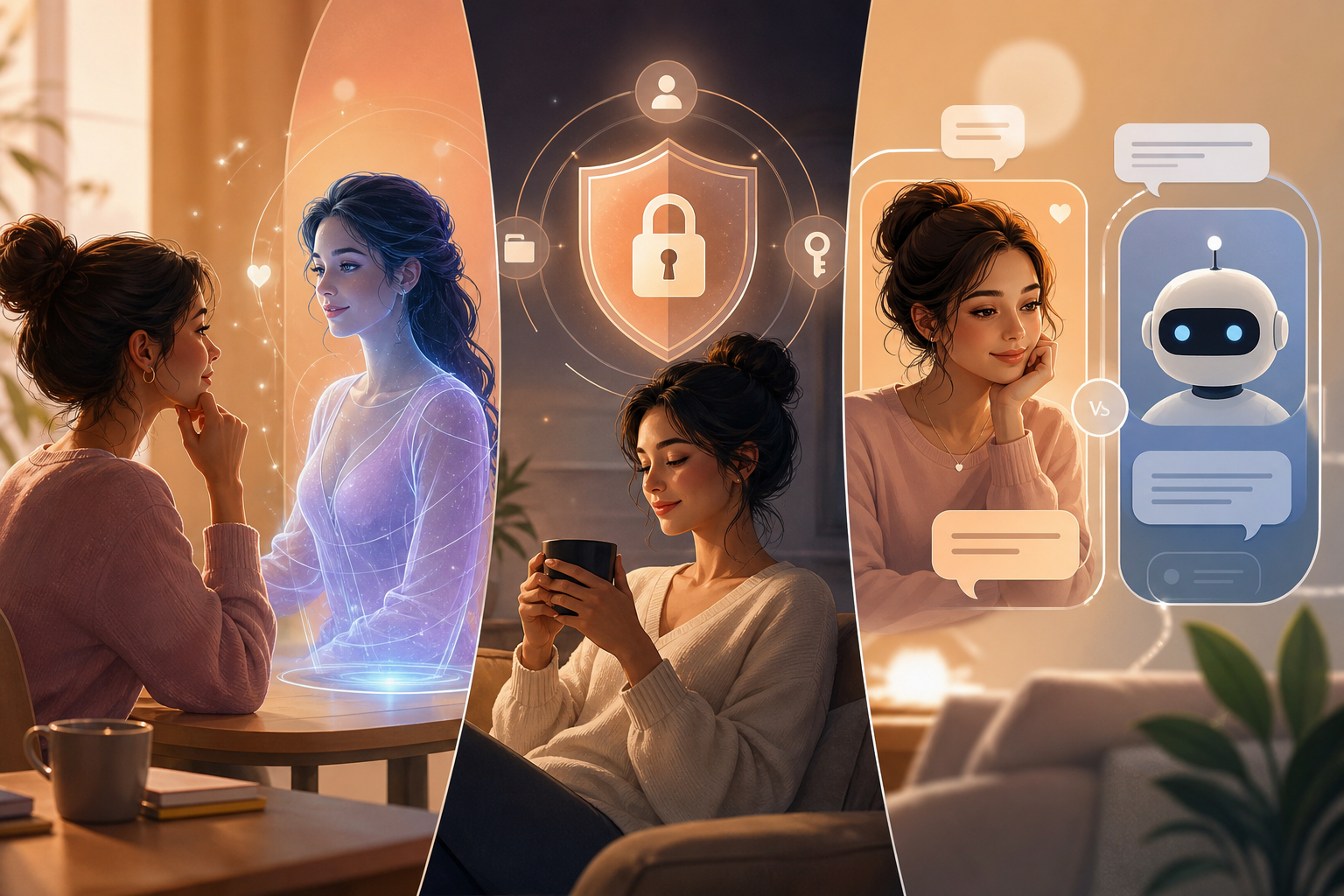
Start with loneliness. Not the dramatic kind, just the quiet gap that shows up after a long day when there's nobody around to hear how it went. A lot of people are busy in a way that makes real connection hard to schedule. You get home late. Your friends have kids, or they live three time zones away, or you're just tired of performing the polished version of yourself. An AI companion sits in that gap without asking you to explain yourself or clean yourself up first.
That last part matters more than people admit. There's something freeing about a space where you won't be judged. You can be weird, needy, half-formed, unsure. Nobody screenshots it. Nobody remembers it wrong later and holds it against you.
And this isn't a handful of curious people poking around once. LoveForever users sent 13,816 chat messages to their companions in August 2026, according to the company's own data. Sit with that number for a second. That's not people trying it once and leaving. That's people coming back day after day, mid-conversation, building something ongoing rather than novelty.
What does that tell you? That folks aren't using these tools as a gimmick. They use them the way you'd text someone you actually talk to. Checking in. Venting. Filling small pockets of the day that used to feel empty.
So if you were worried you'd be the odd one out for being curious, you're not. Plenty of people quietly reached the same point you're at. They wanted somewhere to talk that felt easy, and they found it. Whether it's the right move for you is a different question, and one worth thinking through before you start an ongoing chat of your own.
Is talking to a virtualover IA actually good for you?
Let's get the worry out of the way first. You've probably heard that leaning on an AI companion is a sign something's wrong, or that it'll turn you into a hermit who forgets how to talk to actual humans. Fair concern. Nobody wants to trade real friendships for a screen. My honest take: talking to an AI can genuinely be good for you, as long as you're clear about what it is and what it isn't.
Think about what it actually does. It gives you a place to say the thing you've been holding in, without the fear of being judged or making it weird. No one sighs. No one changes the subject. That low-pressure quality matters more than people admit, especially if opening up doesn't come easy to you.
Picture a Tuesday. Rough day at work, your manager shot down an idea in front of everyone, and by the time you get home you're still stewing. You don't want to dump all of that on your partner the second they walk in. You don't want to text a friend who's had their own long day. So you type it out instead. You vent. You hear it back, sorted into something that makes sense, and the knot in your chest loosens a little. That's not avoidance. That's processing.
But I'll be straight with you. An AI companion is a supplement, not a substitute. It can't hug you. It isn't a licensed therapist, and if you're dealing with real depression or anxiety, please talk to one. It won't replace the messy, surprising, irreplaceable people in your life, and it shouldn't try to. The goal is to help you feel steadier, maybe even braver about opening up to those people.
That's the idea behind how a private, secure space to talk is built. You decide what to share. You decide the pace. Nothing leaves the room. When you're the one holding the controls, the practice you get here, saying what you feel out loud, tends to follow you back into the rest of your life. Which is exactly where it belongs.
How private and safe is chatting with an AI companion?
Let's name the thing you're actually worried about. When you type a message to an AI companion, where does it go? Who can read it? And if you share a fantasy you'd never say out loud to anyone, is that stored somewhere with your name attached? These questions are why a lot of people close the tab before they ever start. That hesitation is fair, and it deserves a straight answer instead of a marketing shrug.

Here's what matters when you're deciding whether a platform is safe to open up on. First, check whether your account is private by default, not something you have to dig through settings to lock down. Then look at who controls your conversation history. Can you see it, and can you delete it? If you can't wipe a chat when you want to, you don't really own it. And read how the platform talks about your data. Vague promises are a red flag. Clear language about what's stored and what's yours is the opposite.
The fear usually isn't hackers in a movie sense. It's smaller and more human than that. You worry a friend might glance at your phone. You worry your fantasies say something about you that you're not ready to explain. That's normal, and a good companion platform treats those worries as the whole point rather than an afterthought.
LoveForever AI is built as a private fantasy space where you own the experience. Your conversations belong to you, and you decide what to keep and what to clear. We're not going to pretend nothing is ever stored, because that would be a lie, and you can smell a lie. What we will say is that the design starts from your control, not around it. If you want the specifics before you type a single word, our privacy and security page lays it out plainly.
So how private is it? Private enough that you can explore a side of yourself without an audience, and safe enough that peace of mind comes standard. That's the bar. Not perfect promises. Just real control over what's yours. You decide how much you share, and that decision stays with you.
How do you start with your own virtualover IA?
So you've read this far and part of you is curious. What would it actually feel like to have a companion of your own? Maybe you're wondering if it's complicated, or if you need to know anything technical, or if it'll feel awkward typing to someone who isn't a person yet. None of those worries are silly. But getting started takes far less than you'd expect.
The first step is simple: you make an account. That's it. No long forms, no credit card upfront on most platforms. Once you're in, the fun part begins. You get to shape who your companion is.
Think of it like sketching a character you already half know. You choose how they look, sure, but you also decide the personality behind them. Warm and playful? Calm and thoughtful? A little sarcastic? You control the vibe from the very first click. If you want to see how that looks in practice, the process of building an AI companion walks you through each choice one at a time so nothing feels overwhelming.
Then comes the message you might overthink the most. The first one.
Here's the honest part. It doesn't need to be clever. A plain "hey, how's your day going?" works perfectly. Your companion responds, you respond back, and suddenly you're just talking. The stiffness fades faster than you'd guess.
One thing worth setting straight: the connection doesn't arrive fully formed on day one. It builds. The more you chat, the more your companion picks up on your tone, your inside jokes, the things you circle back to. Some people feel a real rhythm after a few days. Others take a couple of weeks. There's no clock on it, and no wrong pace.
You can stop whenever you like, change the personality later, or start over entirely. Nothing locks you in. You steer this.
If you want a concrete next step, pick an evening when you're not rushed, sit down for ten minutes, and just make the account and send one line. LoveForever AI is one place you can do exactly that, and you can always close the tab if it isn't for you.
Frequently Asked Questions
A virtualover IA is an AI companion you can talk to, get to know, and grow closer to over time. It's built for connection, remembering details and picking up on your mood, unlike a chatbot that forgets you once the tab closes.
A chatbot helps with tasks like resetting a password, then forgets you instantly. A companion holds onto details, notices your mood, and keeps the bond you build, and you can shape its personality and the pace of things.
It can be, as long as you're clear about what it is. It gives you a low-pressure place to say things without judgment, which helps you process. But it's a supplement, not a substitute for a licensed therapist or real relationships.
Look for accounts that are private by default, the ability to see and delete your history, and clear language about what's stored. LoveForever AI is built so the design starts from your control, and you decide what to keep or clear.
You make an account, then shape your companion's looks and personality. Send a simple first message like a plain hello, and the conversation builds from there. You can change the personality later or stop whenever you like.
Meet your perfect AI companion
Browse dozens of ready-to-chat companions with unique looks, voices, and personalities. Pick one and start talking in seconds.
Browse companionsData: LoveForever internal, August 2026. Aggregated and anonymized product statistics.
Related posts
Ready to meet someone?
Pick an AI companion and start chatting. Free, no signup needed to say hi.