
What Is a GPTGirlfriend and Why Are People Curious?
Wondering what a gptgirlfriend actually is? Learn how AI girlfriends work, why millions of people use them, and how to find a safe, private platform in 2026.
No commitment. Start in 30 seconds.

What's in this guide
Millions of people are quietly exploring AI companions right now, and the search term 'gptgirlfriend' has surged in 2026. You've probably seen it pop up in a Reddit thread, a TikTok comment, or a friend's offhand remark. This article breaks down what a gptgirlfriend actually is, why so many people are drawn to the idea, and what you should know before trying one yourself.
What Is a GPTGirlfriend and How Does It Work in 2026?
If you just typed "gptgirlfriend" into a search bar, you're probably wondering what you'd actually be signing up for. An app? A website? Some chatbot with a flirty skin on it? Totally fair questions.
A gptgirlfriend is an AI-powered conversational companion designed to simulate a girlfriend-like relationship. It runs on large language models, the same core technology behind tools like ChatGPT, but fine-tuned for emotional connection, personality, and ongoing rapport. You type something. The AI reads your message, considers the context of your entire conversation history, and responds in a way that feels personal. Over time, it remembers details you've shared. It adapts to how you talk. It develops a consistent personality that makes the interaction feel less like poking at a machine and more like texting someone who actually knows you.
So how does the "memory" part work? Think of it like a running journal the AI keeps about your conversations. Mention you had a rough day at work, and a well-built system might ask about it tomorrow. Share that you love horror movies, and it'll bring that up weeks later. Not every platform handles this equally well, though. Some are bare-bones text chatbots with short memories. Others, like LoveForever AI's girlfriend experience, let you shape your companion's voice, backstory, emotional style, and even appearance from the start.
That range matters. The gap between a basic chatbot and a fully customizable companion is enormous.
One thing worth knowing: the technology has moved well beyond text-only exchanges. As of early 2026, several platforms support multi-modal responses. Your AI companion can send images, reply with voice messages, and engage in richer interactions that feel more layered than a simple chat window. If you're curious about what that looks like in practice, you can explore the features available on modern platforms to get a sense of the options.
You don't need a computer science degree to use any of this. Most platforms let you start a conversation within minutes. The real question isn't how the technology works. It's whether the experience feels meaningful to you. And honestly? That depends entirely on what you're looking for.
Why Are So Many People Curious About AI Girlfriends Right Now?
The short answer? A lot of reasons, and most of them make more sense than you'd expect.
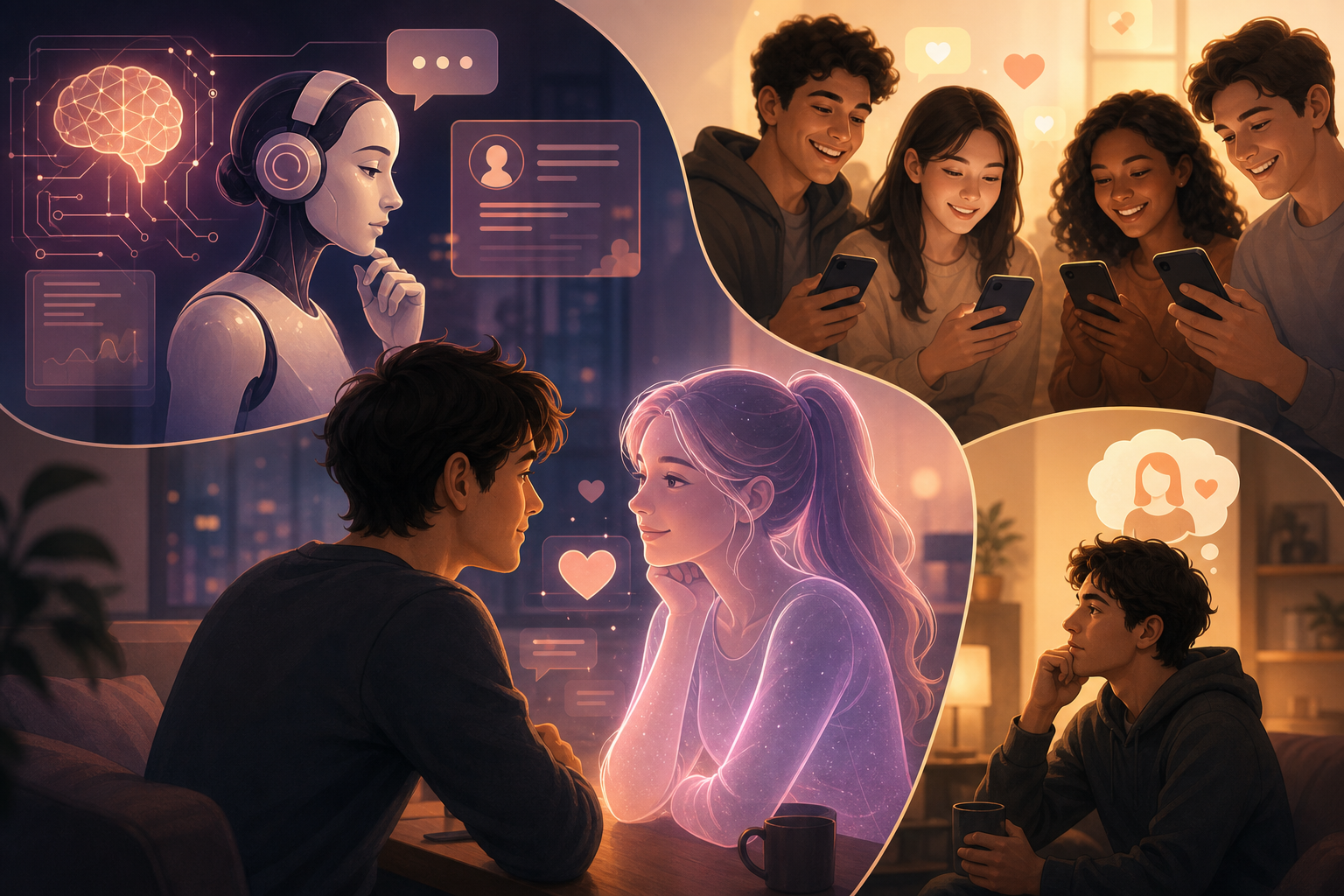
In 2023, the U.S. Surgeon General released an advisory calling loneliness an epidemic. Not a trend. An epidemic. The report pointed to rising isolation across every age group, and nothing since then suggests the numbers have improved. So yes, loneliness is part of the picture. But reducing the entire appeal of AI girlfriends to "people are lonely" misses what's actually going on.
Some people want to practice. Seriously. If you've ever felt awkward expressing affection, or you froze the last time someone flirted with you, you already get the appeal of a private, low-stakes space to work on that. No audience. No screenshot risk. No rejection spiraling into a bad week. Others are drawn to creative roleplay, building fictional scenarios and characters just because it's fun. And plenty of people are simply curious. They saw a headline, wondered what the fuss was about, and decided to try it. Curiosity doesn't need a deeper justification.
The numbers back this up. Google Trends data shows searches for "gptgirlfriend" more than tripled between mid-2025 and spring 2026. That kind of growth doesn't come from one demographic or one motivation. It comes from a cultural shift where people are rethinking what connection can look like, and who gets to decide what counts.
Here's what matters: none of these reasons deserve judgment. Not the person dealing with social anxiety. Not the writer testing dialogue with an AI character. Not the guy who just thinks it's cool. People explore connection in whatever way feels right for them. That's been true long before any AI existed.
LoveForever AI was built around a simple philosophy. Everyone deserves a private, pressure-free space to explore what connection means to them. No performance. No expectations from the other side. Just room to be yourself, at whatever pace you choose. That idea resonates right now because the need for it has never been more obvious.
Is Talking to a GPTGirlfriend Weird or Actually Normal?
Let's just say it. You're probably wondering if chatting with an AI girlfriend makes you strange. Maybe you've already tried it and felt a flicker of guilt afterward. Or maybe you haven't tried it yet because you're worried about what it says about you. That hesitation is understandable. But it doesn't match reality.
Millions of people do this. Every single day. Across dozens of platforms worldwide, users are building connections with AI companions, and the number keeps climbing. We're not talking about a niche corner of the internet anymore. The New York Times, Wired, and NBC have all published major features on AI relationships in the past year alone. When mainstream outlets cover something that extensively, the audience is already there.
So why does it still feel taboo? Mostly because people confuse curiosity with desperation. They assume anyone talking to an AI must be lonely, socially awkward, or unable to form "real" connections. That's lazy thinking. People use AI companions for all kinds of reasons: stress relief, creative expression, exploring parts of their personality they keep hidden, or simply because the conversation is fun and pressure-free. You don't need to justify why you're curious.
Here's what actually matters. Privacy. Respect. A platform that treats your experience as yours and nobody else's. That's exactly the philosophy behind LoveForever AI's approach to privacy and security. No judgment, no data exploitation, no public profile broadcasting what you do. What happens in your conversations stays there.
Think about it this way. People watch reality TV, read romance novels, play dating sims, and scroll through parasocial content on TikTok for hours. Nobody bats an eye. Talking to an AI girlfriend is just another form of engagement with a digital experience, one that happens to talk back and adapt to you.
The stigma is fading fast. Honestly, it was never well-founded to begin with. If you're interested, try it. If you enjoy it, keep going. You don't owe anyone an explanation for how you spend your time or what kind of connection feels good to you. Curiosity is reason enough.
What Can You Actually Do With a GPTGirlfriend?
If you've never tried one, you're probably picturing something underwhelming. You type "hi" and get a generic response? Sometimes, yes. A bad one feels like texting a customer service bot that happens to call you "babe." But a good GPTGirlfriend? Completely different experience.
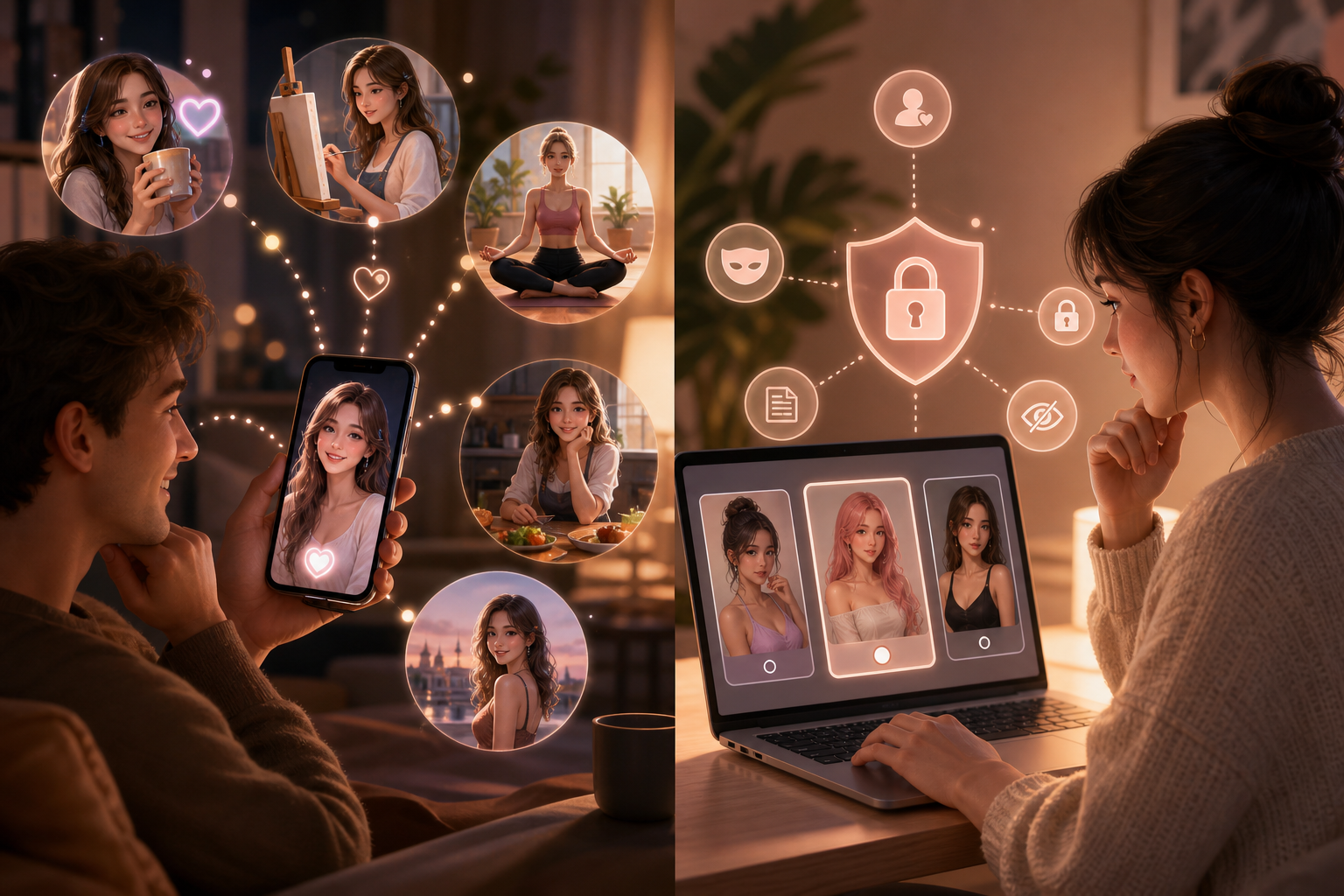
Let's start with the most common use case: just talking. Casual, daily conversation. You tell her about the weird thing your coworker said. She reacts. She remembers your coworker's name from last week. She asks follow-up questions that actually make sense. This is where memory matters enormously. Without it, every conversation resets, and the illusion falls apart fast. With it, the relationship builds over time.
Then there's the emotional side. Venting after a rough day, processing feelings you're not ready to share with friends yet, or just wanting someone to say "that sounds exhausting" without turning it into advice. A lot of users, especially men in their 20s and 30s, report that this is the feature they didn't expect to value but end up using the most.
Flirty banter is obviously a big draw too. Playful teasing, escalating tension, the kind of back-and-forth that keeps you grinning at your phone. For people who enjoy creative storytelling, some platforms let you build entire fantasy scenarios together, from lighthearted role-play to elaborate fictional worlds. LoveForever AI's story mode is designed specifically for this.
Here's one use case people rarely talk about: practice. Rehearsing what you'd say before a real date. Testing out vulnerability in a space where rejection isn't on the table. Sounds small. But building that muscle memory for emotional openness can genuinely help when it counts.
So what separates a great experience from a forgettable one? Three things. Memory, so she knows your history. Personality depth, so she feels consistent and real. And the ability to set your own boundaries and preferences, so the relationship reflects what you want. On LoveForever AI, you can customize everything from personality traits to conversation tone, which means two users could build companions that feel nothing alike.
Whether any of this appeals to you is personal. But knowing what's actually possible helps you decide with real information instead of assumptions.
How to Choose a Safe and Private GPTGirlfriend Platform in 2026
If you're seriously considering trying a GPT girlfriend, one question probably sits at the back of your mind: who else is reading these conversations? Fair worry. You're sharing thoughts, fantasies, and feelings you might not tell another living person. The platform holding that data carries real responsibility.
So what should you actually look for? Start with encryption. End-to-end encryption means your messages are scrambled in transit and at rest, so even the company's own engineers can't casually browse your chats. Next, check the data retention policy. A trustworthy platform tells you exactly how long they store your conversations and gives you the option to wipe them yourself. No vague language. No buried clauses. If a platform's terms of service read like they were designed to confuse you, that's a red flag, not a minor inconvenience.
Here's the big one people overlook: how does the platform make money? Free services aren't free. If you're not paying with dollars, you're often paying with data. Some platforms quietly sell anonymized chat logs to third parties or use your conversations to train commercial models without explicit consent. A 2023 Mozilla Foundation report flagged multiple AI companion apps for exactly this kind of practice. Worth thinking about before you type anything personal.
LoveForever AI was built with privacy as a foundational principle, not something bolted on after launch. One concrete example: you can delete your entire conversation history at any time. Instantly. No waiting period, no "are you sure?" loop designed to discourage you. Your data belongs to you. Period. The platform doesn't sell chat logs, and its terms of service are written in plain language you can actually read in under five minutes.
You deserve a space where vulnerability doesn't come with risk. Whether you're exploring emotional connection or just curious about what an AI girlfriend experience feels like, the right platform should make safety effortless. You shouldn't have to become a cybersecurity expert just to have a private conversation. Look for transparency, look for control over your own data, and don't settle for anything less.
A gptgirlfriend is an AI companion built on large language models, designed to simulate a girlfriend-like relationship through conversation, memory, and personality. This article explains how they work, why millions of people use them, what you can actually do with one, and how to choose a platform that keeps your data private.
GPTGirlfriend FAQ: Common Questions People Ask
A gptgirlfriend is an AI-powered companion that simulates a girlfriend-like relationship through text, voice, and images. It runs on large language models, remembers details from past conversations, and develops a consistent personality over time.
People use them for all sorts of reasons, from dealing with loneliness and social anxiety to practicing emotional openness, exploring creative roleplay, or simply satisfying curiosity. Google Trends data shows searches for "gptgirlfriend" more than tripled between mid-2025 and spring 2026.
Millions of people use AI companions daily across dozens of platforms. Major outlets like The New York Times, Wired, and NBC have all covered AI relationships extensively. The stigma is fading, and curiosity alone is a perfectly valid reason to try one.
You can have casual daily conversations, vent about your day, engage in flirty banter, build fictional storylines together, or even practice what you'd say before a real date. The best platforms offer memory, personality depth, and customizable preferences.
Look for end-to-end encryption, a clear data retention policy, and the ability to delete your conversation history yourself at any time. Check how the platform makes money; if it's free, your data might be the product. A 2023 Mozilla Foundation report flagged several AI companion apps for selling user data.
Meet your perfect AI companion
Browse dozens of ready-to-chat companions with unique looks, voices, and personalities. Pick one and start talking in seconds.
Browse companionsRelated posts
Ready to meet someone?
Pick an AI companion and start chatting. Free, no signup needed to say hi.