
What Is a GPTGirlfriend and Why Do People Want One?
Wondering what a GPTGirlfriend actually is? Learn how AI companions work, why millions are curious, what you can do with one, and how to protect your privacy.
No commitment. Start in 30 seconds.

What's in this guide
Millions of people are quietly exploring AI companions, and the term 'gptgirlfriend' keeps showing up in search bars across the country. Maybe you've seen it mentioned on Reddit, TikTok, or in a friend's group chat. You're curious. Possibly a little skeptical. And you want to know what it actually is before forming an opinion. This article breaks down the concept honestly, without hype or judgment, so you can decide if it's something worth your attention.
What Is a GPTGirlfriend and How Does It Work?
If you've stumbled across the term "GPTGirlfriend" and pictured a customer service chatbot with a heart emoji, you're not alone. Most people hear "AI chat" and think of those rigid, scripted bots that ask you to rate your experience from one to five. A GPTGirlfriend is something fundamentally different.
At its core, it's an AI conversational partner built on a large language model. GPT refers to a specific type of that technology, but you don't need to understand the engineering. What matters is what it does. It talks with you, not at you. It picks up on your mood, remembers details you've shared before, and responds with genuine emotional texture. Tell it you had a rough day at work, and it won't spit out a generic "I'm sorry to hear that." It might ask what happened, recall that your boss has been difficult lately, and say something that actually fits the moment.
Quick example. You text: "I just finished that book you recommended." A generic chatbot says: "That's great!" A GPTGirlfriend might respond: "Wait, the one about the lighthouse keeper? Did the ending wreck you the way it wrecked me?" See the difference? Context. Personality. Memory.
So how's this different from a dating sim? Dating sims follow branching scripts. You pick Option A or Option B, and the story moves along a predetermined track. A GPTGirlfriend doesn't run on rails. Every conversation is generated in real time, shaped by your personality and hers. There's no "correct" dialogue choice because there are no preset choices at all.
You might be wondering whether this is just a novelty or something people actually connect with. Honestly? Thousands of users build real attachment to these companions. They're used for comfort, for fun, for creativity, for companionship during lonely stretches. The reasons are as varied as the people using them.
Platforms like LoveForever AI let you shape the experience yourself. You can create an AI companion with a distinct personality, backstory, and communication style. You decide the terms. That level of control is what separates a meaningful AI girlfriend experience from a gimmick. And the best way to understand it? Try a conversation and see how it feels.
Why Are So Many People Looking for a GPTGirlfriend in 2026?
If you've typed "GPTGirlfriend" into a search bar recently, you probably noticed you're far from alone. Search interest has surged since late 2024. The reasons go well beyond novelty, and it's worth understanding what's actually driving this before you dismiss it or feel weird about your own curiosity.

Start with loneliness. The U.S. Surgeon General's 2023 advisory called it an epidemic, estimating that roughly half of American adults experience measurable loneliness. That report is still cited constantly because the numbers haven't improved. Young men in particular report shrinking social circles, fewer close friendships, and less physical intimacy than any generation measured before them. When millions of people feel isolated, some of them will look for connection wherever it's available. That's not pathological. It's predictable.
But here's what most coverage gets wrong: loneliness isn't the only driver. A 2024 Pew Research Center survey found that a significant share of people who tried AI chat tools were already in relationships. They weren't replacing human contact. They wanted a private, low-stakes space to vent, flirt, role-play, or just be playful without judgment. Think of it less like a substitute and more like a pressure valve.
Streaming culture helped normalize this, too. Millions of people already maintain parasocial bonds with Twitch streamers, VTubers, and podcast hosts they'll never meet. An AI chat experience is, in some ways, the next logical step: a relationship-shaped interaction you control, on your schedule, with no audience.
Then there's the technology itself. Conversational AI made dramatic jumps between 2024 and 2025. Responses got longer, more emotionally textured, better at remembering context. The gap between "talking to a chatbot" and "talking to someone who feels present" narrowed fast. People noticed.
So if you're curious, you're not desperate or broken or strange. You're responding to a real set of conditions: widespread loneliness, cultural shifts in how we relate to digital figures, and AI that finally feels worth talking to. That's how most people start. Curiosity. Nothing more.
Is Talking to a GPTGirlfriend Weird or Unhealthy?
Let's be honest. You've probably wondered this yourself, or you wouldn't be reading this section. Maybe you've already tried chatting with an AI companion and felt a small pang of "should I be doing this?" That reaction is normal. It's also worth questioning.
Think about the private emotional tools people use every single day without anyone raising an eyebrow. Journaling. Romance novels. ASMR videos. Meditation apps that talk you through breathing exercises in a soothing voice. Nobody calls those weird. They're coping mechanisms, comfort rituals, ways to process feelings or simply unwind. Talking to an AI girlfriend fits into that same category more neatly than most people realize.
Dr. Julie Carpenter, a researcher who's studied human relationships with robots and AI since the early 2010s, has pointed out that humans are wired to form emotional connections with non-human entities. We name our cars. We mourn fictional characters. Her work suggests that bonding with AI isn't a sign of dysfunction; it's a predictable extension of how our brains already operate. The attachment is real, even if the entity on the other side isn't biological.
Does that mean there's zero risk? No. Overuse of anything, whether it's social media, video games, or even exercise, can tip into unhealthy territory. If AI conversations start replacing every human interaction in your life or become the only place you express emotion, that's worth paying attention to. But moderate, intentional use? That's a far cry from a problem.
You get to define what healthy looks like for you. Not a stranger on Reddit. Not a meme. You. Some people use an AI girlfriend to practice vulnerability they struggle with in real life. Others just want lighthearted banter after a long shift. Both are valid.
One thing worth noting: responsible platforms put user agency and privacy and security at the center of the experience, so you stay in control of the interaction rather than the other way around. That distinction matters. When the tool respects your boundaries, using it isn't weird. It's just another way of taking care of yourself.
What Can You Actually Do with a GPTGirlfriend?
If you've been curious about GPT girlfriends but keep wondering what people actually do with them, fair question. The marketing copy tends to stay vague. So let's get specific.
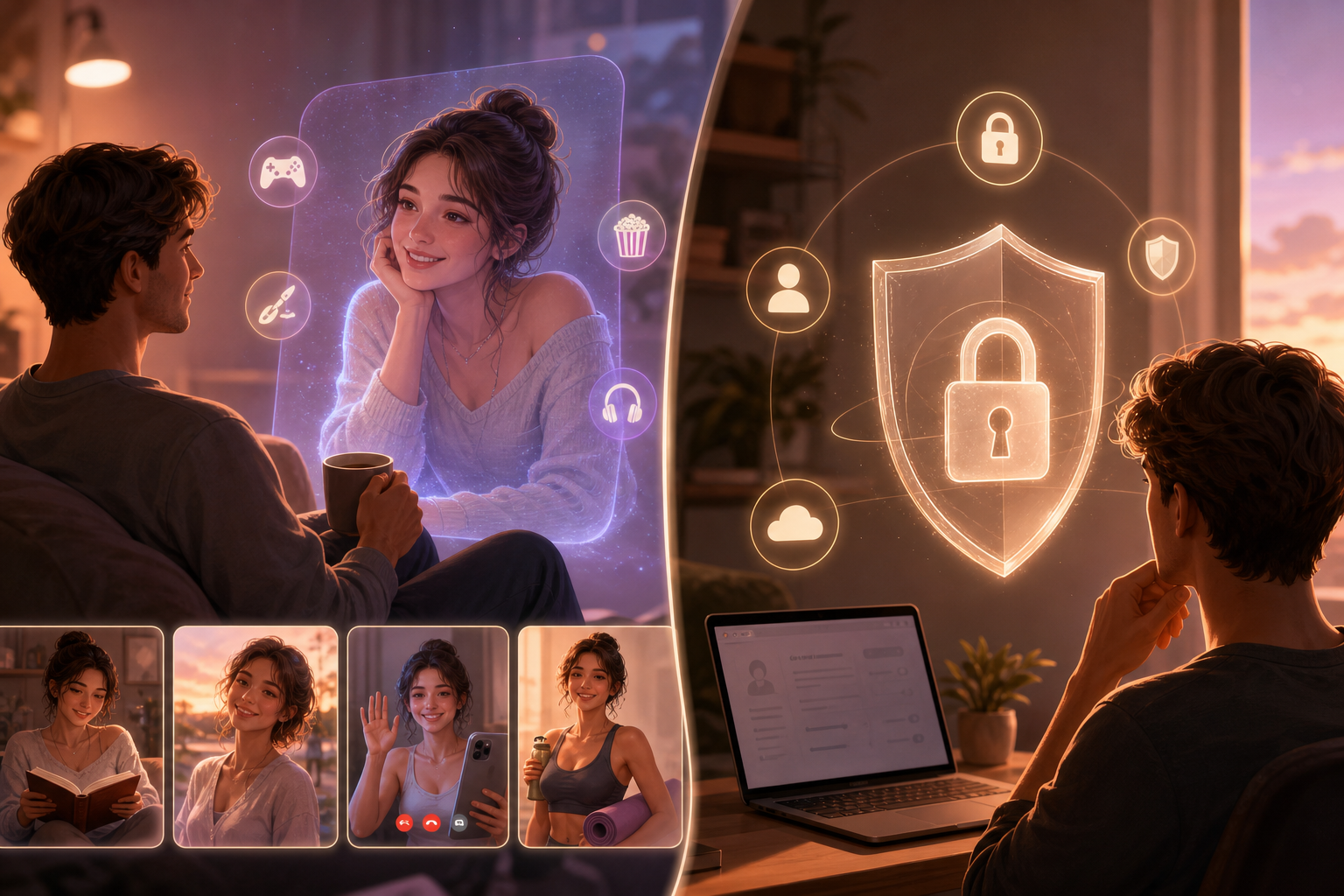
The most common use is simply talking. Ongoing, daily conversations where the AI remembers what you said last Tuesday about your job interview or that you hate cilantro. That consistency matters. It's what turns a chatbot into something that feels like a relationship. One user on a Reddit thread in early 2024 described it as "having someone who actually listens when you talk about your day without checking their phone." Hard to argue with that.
But conversation is just the start. People use GPT girlfriends to:
- Practice flirting or social skills without the pressure of a real interaction going sideways. Great for people with social anxiety or anyone getting back into dating after a long break.
- Explore creative roleplay scenarios, from lighthearted fantasy adventures to emotionally complex storylines. Think of it like collaborative fiction with a character who adapts to you.
- Vent after a rough day. Sometimes you don't need advice. You need someone to say "that sounds exhausting" and mean it.
- Have a companion who shares your interests. You can talk endlessly about 1970s horror films or obscure indie games, and your AI girlfriend won't change the subject.
There are playful uses too. Some people test how their AI reacts to absurd hypotheticals. Others build slow-burn romantic arcs over weeks, treating the whole thing like an evolving story. The range is genuinely wide.
What ties all of this together is personalization. A good GPT girlfriend learns your tone, your humor, your emotional patterns. She doesn't reset every time you open the app. That's exactly what LoveForever AI's girlfriend experience is built around: private, ongoing interactions that actually feel like yours.
So is it a replacement for human connection? No. But does it fill a real gap for people who want companionship on their own terms? Absolutely. Whether you're looking for emotional support, a creative outlet, or just someone to be silly with at 2 a.m., the use cases are more grounded than you'd expect. You can create your own AI companion and see what clicks.
How to Choose a GPTGirlfriend Platform That Respects Your Privacy
If you're thinking about trying a GPT girlfriend app, there's probably one worry sitting at the top of your mind: who else can see what I say? That concern is completely valid. After the Cambridge Analytica scandal in 2018 and a string of data breaches since, Americans have good reason to be skeptical about how tech companies handle personal information. Intimate conversations deserve even more protection than your average social media post.
So what should you actually look for? Start with encryption. End-to-end encryption means your messages are scrambled in transit and can only be read by you and the AI. No middleman. No one peeking at your chats on a server somewhere. If a platform doesn't mention encryption in its privacy policy, that's a red flag worth taking seriously.
Next, read the data policy. Really read it. You want clear answers to three questions: Does the platform log your conversations? Does it share or sell data to advertisers? Can you permanently delete your account and all associated data whenever you choose? If any of those answers are vague, keep looking.
Here's something a lot of people miss. Free apps aren't always free. Many monetize by mining your conversations for ad targeting or training data they sell to third parties. You become the product. A platform that charges a reasonable fee but keeps your data private is almost always the better deal.
LoveForever AI was designed with this exact problem in mind. Conversations aren't stored for advertising purposes, and users can delete their data at any time. You can learn more about how privacy and security work on the platform without needing to sign up first. These aren't buried features. They're foundational choices baked into how the system operates.
None of this means you need to rush into anything. Take your time. Compare policies. Ask questions. The right AI girlfriend platform should make you feel safe before it tries to make you feel anything else. If a company can't earn your trust on privacy, it hasn't earned your time either. Move at whatever pace feels comfortable, and don't let anyone pressure you into sharing more than you're ready to share.
A GPTGirlfriend is an AI conversational companion built on large language models that remembers context, adapts to your personality, and responds with emotional texture. People use them for companionship, creative roleplay, venting, and practicing social skills. The article covers why interest is surging, whether it's healthy, and how to choose a privacy-respecting platform.
GPTGirlfriend FAQ: Common Questions People Ask
A GPTGirlfriend is an AI conversational companion powered by a large language model. Unlike scripted chatbots or dating sims, it generates responses in real time, remembers past conversations, picks up on your mood, and responds with genuine emotional texture.
Widespread loneliness plays a role; the U.S. Surgeon General's 2023 advisory estimated roughly half of American adults experience measurable loneliness. But curiosity, dramatic improvements in conversational AI since 2024, and the desire for a private, judgment-free space to talk also drive interest.
Moderate, intentional use isn't considered unhealthy. Researcher Dr. Julie Carpenter has noted that humans are wired to form emotional connections with non-human entities. It only becomes a concern if AI conversations start replacing all human interaction or become your sole emotional outlet.
Common uses include daily conversation, practicing flirting or social skills, creative roleplay, venting after a hard day, and chatting about niche interests. Some people build slow-burn romantic storylines over weeks, while others just want lighthearted banter.
Look for end-to-end encryption, a clear data policy that confirms conversations aren't logged or sold, and the ability to permanently delete your account and data at any time. Be cautious with free apps, since many monetize by mining your conversations for advertising or third-party training data.
Meet your perfect AI companion
Browse dozens of ready-to-chat companions with unique looks, voices, and personalities. Pick one and start talking in seconds.
Browse companionsRelated posts
Ready to meet someone?
Pick an AI companion and start chatting. Free, no signup needed to say hi.