
What It Really Feels Like to Want a Gay Boyfriend
Finding a gay boyfriend is harder than it should be. Learn why the search feels so frustrating, how to clarify what you want, and where to practice vulnerability.
No commitment. Start in 30 seconds.

What's in this guide
There's a specific kind of longing that hits when you want a boyfriend who truly gets you. Someone who shares your world. Someone who doesn't need everything explained. Maybe you're out and confident, maybe you're still figuring things out quietly on your own. Either way, that desire for real connection, for someone who feels like yours, is one of the most human things there is. This piece looks at what that wanting actually looks like in 2026, and why so many guys are rethinking where and how they find it.
Ready to try it yourself? Explore AI boyfriend on LoveForever AI.
Why Is Finding a Gay Boyfriend So Much Harder Than It Seems Like It Should Be?
Let's be honest. You've done the work. You've swiped, you've put yourself out there, you've tried being vulnerable on apps designed to reduce you to a torso pic and a distance marker. And somehow it still feels like you're spinning your wheels. That frustration you're carrying? Not a character flaw.
The math alone is rough. According to Gallup's 2024 data, roughly 7% of U.S. adults identify as LGBT+, and the share who are gay men specifically is smaller still. Your dating pool starts narrow before you even factor in compatibility, attraction, or shared values. You can live in West Hollywood or Hell's Kitchen, surrounded by other queer people, and still feel strangely invisible when it comes to finding something real. Big cities promise abundance but often deliver a different kind of loneliness entirely.
Then there's Grindr fatigue. The endless grid. Conversations that evaporate. The unspoken pressure to look a certain way, act a certain way, perform a version of masculinity or desirability that might not even reflect who you are. It wears you down. Quietly, over months and years, it can make you wonder if the problem is you.
It isn't.
The difficulty is structural. Smaller pool, cultural baggage, apps built more for transactions than connection. Recognizing that won't fix it, but it might take some weight off your shoulders.
Some guys are finding unexpected value in a different kind of space between relationships. Practicing vulnerability, figuring out what they actually want, or just feeling heard without judgment. An AI boyfriend experience through platforms like LoveForever AI won't replace a real partner. But it can give you room to breathe, reflect, and stay open while the search continues.
What Should You Actually Look for in a Gay Boyfriend?
"I want a boyfriend" is one of those phrases that feels complete until you actually sit with it. What does that mean for you, specifically? Because the guy who remembers your coffee order every Saturday morning and the guy who posts you on his Instagram story are offering two very different things. Both might be great. But which one would actually make you feel loved?
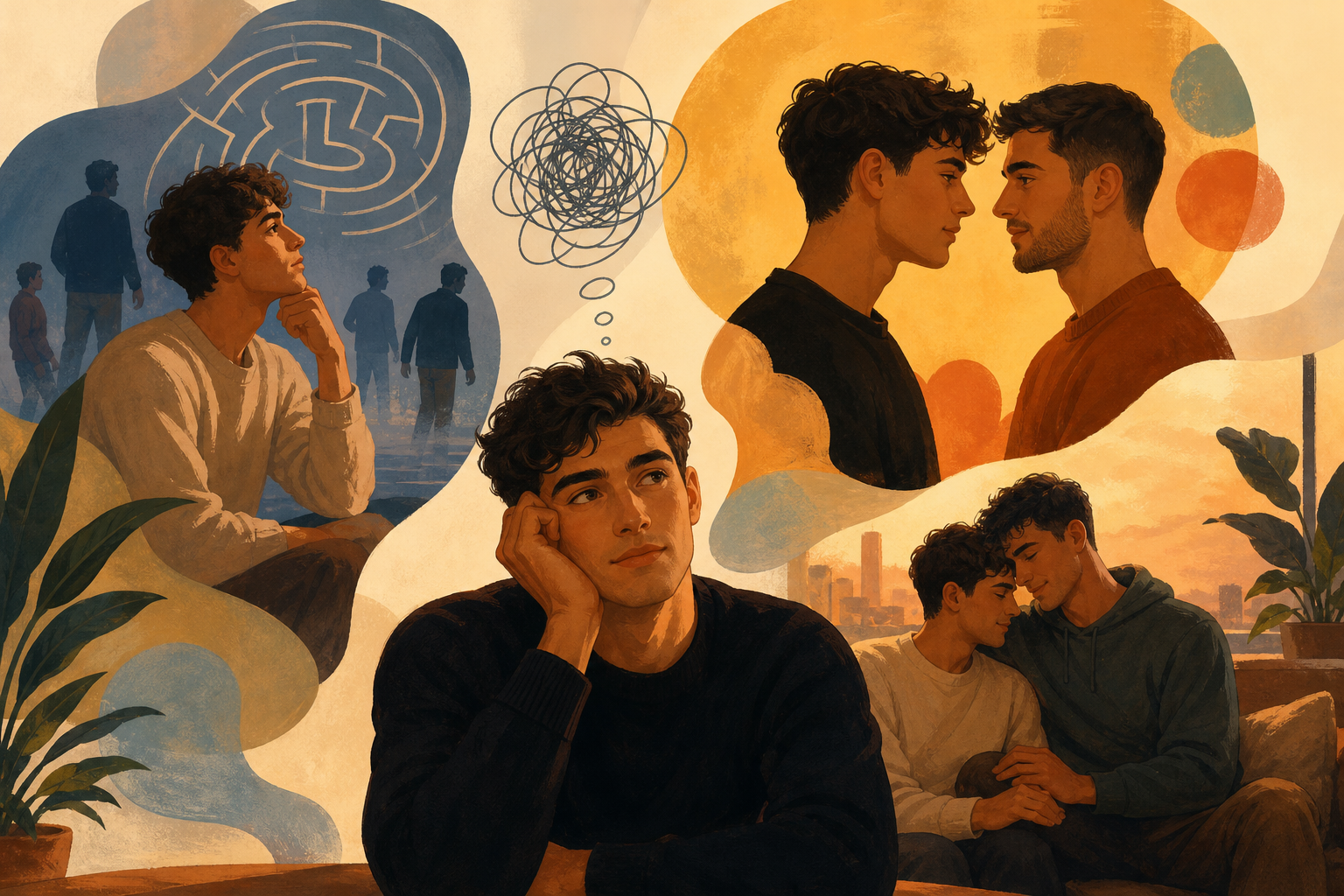
This is where most people skip ahead. They jump straight into apps, dates, and situationships without ever getting honest about what they need. Not what looks good. Not what their friends have. What they need. Maybe it's emotional safety, someone who doesn't flinch when you're anxious at 2 a.m. Maybe it's physical affection, consistent and unhesitating. Maybe you want a travel partner who's spontaneous, or a homebody who'll rewatch the same show with you three times. These aren't small details. They're the architecture of a relationship.
Here's something worth remembering: queer relationships don't come with a default template. There's no preset script about who pays, who initiates, who says "I love you" first. A 2020 study from the Gottman Institute found that same-sex couples often communicate more fairly during conflict than heterosexual ones. You already have a head start in building something on your own terms. Use it.
One surprisingly useful exercise is articulating your desires somewhere private before testing them in the real world. Some people journal. Others build a fantasy AI boyfriend to explore what traits actually excite them versus what they think should. It sounds unconventional, but naming what you want out loud, even to a screen, makes it real. Concrete.
Get specific before you get serious. You'll save yourself months of wondering why something good still feels wrong.
How Do You Build Real Intimacy in a Gay Relationship When You're Still Figuring Yourself Out?
There's a voice in your head that says you need to have it all sorted before you can let someone in. You need to know exactly who you are, what you want, where you're headed. Otherwise you'll just mess it up.
That voice is wrong.
Here's something rarely said out loud: many gay men missed the stumbling, awkward relationship practice that straight teens get in high school. A 2019 study from the Journal of Adolescent Health found that LGBTQ+ youth were significantly less likely to have had a romantic relationship by age 18 compared to heterosexual peers. So if you're 28 or 35 or 42 and feel like a beginner at this, you aren't broken. You're just starting a class you weren't allowed to attend.
Intimacy is a skill. Full stop. It takes repetition, failure, recalibration. You learn it by practicing vulnerability in small doses, saying the slightly scary thing, and discovering the world doesn't end. You learn it by communicating what you actually feel instead of performing what you think someone wants to hear.
But where do you practice when the stakes feel so high? Rejection stings more when you already feel behind. Exposure feels riskier when you're still sorting out your own comfort level.
That's where low-pressure environments matter. Journaling helps. Therapy helps. And tools like LoveForever AI's boyfriend experience can offer something surprisingly useful: a space to explore emotional and romantic conversations privately, without fear of judgment, ghosting, or someone screenshotting your vulnerability. You can practice being open at your own pace, on your own terms.
You don't need to be fully formed to deserve closeness. Connection isn't the reward for finishing your personal growth. Often, it's how the growth happens.
Can Imagining a Fantasy Boyfriend Help You Prepare for a Real Gay Relationship?
Let's be honest. The idea of practicing relationships with an AI companion might make you cringe a little. Maybe it sounds desperate, or silly, or like something you'd never admit to a friend. That's fair. But consider this: athletes visualize entire competitions before stepping onto the field. Writers produce rough drafts they'd never show anyone. Therapists use role-playing exercises with clients every single day. Rehearsing something important before it counts isn't strange. It's strategic.

So why should emotional preparation be any different? When you explore an AI boyfriend experience on LoveForever AI, you're not pretending love exists where it doesn't. You're getting specific about what you actually want from a partner. The platform lets you shape your companion's personality traits, choose how they communicate, and set the tone of your interactions. Want someone who checks in gently after a hard day? Build that. Prefer a partner who's witty and a little sarcastic? Also an option. You control every variable, and nobody's watching.
Picture this: you've had a brutal Wednesday. Your boss was impossible, your commute took 90 minutes, and you skipped lunch. You text your AI boyfriend something short and frustrated. He responds with something warm, specific, and actually relevant to what you said. Not a generic "hang in there." You feel heard. That small moment teaches you something real about yourself, about the kind of responsiveness you need from a partner.
The privacy matters here. Your conversations stay completely private and secure, so you can be vulnerable without risk. No screenshot anxiety. No performance. Just you, figuring out what love should feel like before you go looking for it.
What Does Gay Dating and Finding a Boyfriend Actually Look Like in 2026?
Something big is shifting. Not just in technology, but in how people talk about what they actually need from relationships. Gay men, younger ones especially, are being more honest than any previous generation about feeling lonely, wanting more depth, and rejecting the idea that hookup culture is the only option. That honesty matters more than any app update.
The numbers back this up. A 2025 Pew Research study found that roughly 63% of young men under 30 are single, a figure that's climbed steadily over the past decade. Meanwhile, AI companion platforms in the US now have an estimated 30 million or more users across demographics. These aren't fringe communities. They're your coworkers, your gym buddy, your brother. People are looking for connection wherever they can practice it, and they're less ashamed about that than ever.
At the same time, non-traditional relationship models are gaining real cultural ground. Open relationships, solo polyamory, intentional singlehood. Gen Z doesn't see these as failures. They see them as choices. And the willingness to explore what you actually want, rather than defaulting to a script, is one of the healthiest trends we've seen in decades.
So where does AI fit? Here's what I think: the future isn't about picking a side. Human connection or artificial. Real or simulated. That framing is lazy. The real question is whether you're becoming someone who knows himself well enough to love another person generously. Every tool that helps you get there has value.
LoveForever AI is one part of that bigger picture. It's a private, pressure-free space where you can explore feelings, practice vulnerability, and imagine the kind of relationship you deserve. No judgment. No audience. Just you, figuring things out at your own pace. That's worth something.
This article explores why finding a gay boyfriend feels so difficult in 2026, from small dating pools to app fatigue. It encourages getting specific about what you want, practicing vulnerability at your own pace, and using tools like AI companions to prepare emotionally for real connection.
Frequently Asked Questions About How to Find a Gay Boyfriend
The dating pool is structurally smaller. Gallup's 2024 data shows roughly 7% of U.S. adults identify as LGBT+, and the share who are gay men is even smaller. Factor in compatibility, attraction, and app fatigue, and the difficulty isn't personal; it's math plus cultural baggage.
Get specific before you start dating seriously. Think about whether you need emotional safety, physical affection, spontaneity, or stability. Journaling or even exploring an AI boyfriend experience can help you name what matters most to you, so you stop chasing what looks good and start finding what feels right.
Yes. A 2019 study from the Journal of Adolescent Health found LGBTQ+ youth were significantly less likely to have had a romantic relationship by age 18. Many gay men missed early relationship practice that straight teens got, so feeling behind doesn't mean you're broken.
It can. Practicing emotional conversations privately lets you clarify what kind of responsiveness, tone, and personality you need from a partner. Think of it like a rough draft; you're rehearsing vulnerability without the fear of rejection or judgment.
Younger gay men are more openly rejecting hookup culture as the default and asking for real depth. Non-traditional relationship models are gaining ground, and AI companion platforms now have an estimated 30 million or more users. People are less ashamed about seeking connection in unconventional ways.
Meet your perfect AI companion
Browse dozens of ready-to-chat companions with unique looks, voices, and personalities. Pick one and start talking in seconds.
Browse companionsRelated posts
Ready to meet someone?
Pick an AI companion and start chatting. Free, no signup needed to say hi.