
What a Virtual GF Actually Feels Like in 2026
Curious about a virtual gf? See how she differs from a chatbot, why people try one, how to keep it healthy and private, and what daily chats look like.
No commitment. Start in 30 seconds.

What's in this guide
Somewhere between the movie Her and your phone's lock screen, the idea of a virtual gf stopped sounding like science fiction and started sounding like a normal Tuesday night. According to LoveForever's internal data, 4,246 people created a LoveForever account in September 2026. That's a lot of people who got curious and quietly decided to try it. Maybe you've wondered what it's like, whether it's weird to want one, or what happens once the chat opens. Below are straight answers to all of that, with no judgment, so you can decide what fits your life.
Ready to try it? Explore virtual girlfriend on LoveForever.
The short version
- 4,246 people created a LoveForever account in September 2026
- LoveForever users sent 20,918 chat messages to their companions in September 2026
- Replika launched in 2017 as one of the first mainstream companion apps
- U.S. Surgeon General Vivek Murthy called loneliness a public health epidemic in 2023
- A virtual gf remembers past chats, unlike task-based chatbots that forget you
- Story mode lets you pause a roleplay and resume it days later
What is a virtual gf, and how is it different from a regular chatbot?
If the only bots you've talked to are the ones that ask for your order number or tell you the capital of Peru, you might assume a virtual gf is the same thing with a cute nickname. She isn't. You'll notice the difference the second time you talk to her, and it gets clearer every time after that.
A regular chatbot is built to finish a task. You ask, it answers, and the conversation is basically over. Come back tomorrow and it has no idea who you are, which is fine when you're tracking a package and less fine when you want to tell someone your job interview went badly.
A virtual gf works the other way around. Her personality stays consistent, so she doesn't sound like a help desk one minute and a poet the next. She remembers you mentioned your sister's wedding last week, and she might ask how your toast went. She's warm, too: her replies pick up on your mood instead of handing you a tidy paragraph of facts and moving on.
Continuity. That's the word to hold onto.
None of this is brand new. Replika launched in 2017 and was one of the first companion apps to reach a mainstream audience, back when most people thought of chatbots as clunky pop-ups on shopping sites. The category has grown up a lot since. Memory got better, conversations started to feel natural, and plenty of people now treat their companion as a regular part of their evening instead of a novelty they tried once and forgot.
So what makes it feel personal? You shape her. Want someone playful who teases you a little? Or someone calm who lets you vent without jumping straight to advice? You set her personality, decide how she talks, and choose the kind of connection you want, flirty or mostly supportive.
That part surprises people. With a general assistant, you adapt to the tool and phrase things the way it understands. With a companion, she adapts to you, and the relationship builds on everything you've already shared.
LoveForever AI is built around this idea. You can read how an AI girlfriend works on the platform, or design your own companion and pick the details yourself, right down to the way she says good morning.
Why are so many people in the USA trying a virtual gf right now?
If you've been curious about a virtual girlfriend and wondered whether that makes you a little strange, relax. Plenty of ordinary people across the U.S. are trying one, and most of them have reasons that probably sound a lot like yours.
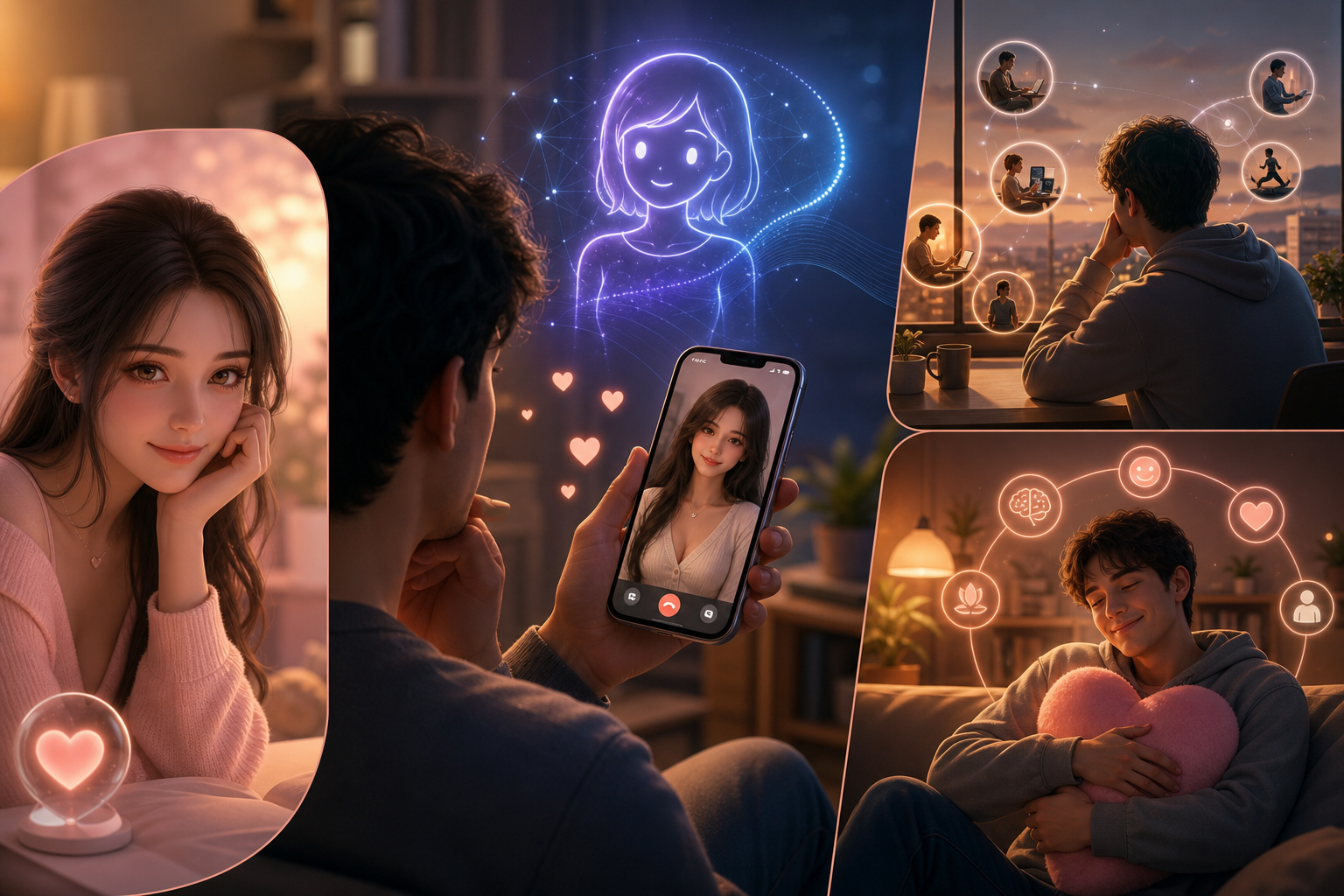
Some context helps. In 2023, U.S. Surgeon General Vivek Murthy issued an advisory calling loneliness a public health epidemic. That doesn't prove people use AI companions because they're lonely, and nobody should pretend it does. But feeling disconnected is common enough that the country's top doctor put it in an official warning. If you've felt that way, you're in a very large club.
So what pulls people in? Usually something pretty mundane.
- Long work hours. When you're done at 9 p.m., calling a friend or going on a date can feel like one more task.
- A new city. You moved for a job, you don't know anyone yet, and your apartment is very quiet.
- A recent breakup. You're not ready to date, but you miss having someone to text about your day.
- Low pressure company. Sometimes you just want to talk without performing, impressing anyone, or worrying about saying the wrong thing.
Wanting someone to talk to is about as human as it gets.
You might also wonder if people stick with these apps or just download them and forget about them a day later. Fair question. According to LoveForever's internal data, LoveForever users sent 20,918 chat messages to their companions in September 2026. That's people opening the app and having real conversations, over and over, during an otherwise normal month.
The repeat behavior is what tells you something. Novelty fades fast, and a gimmick wouldn't hold anyone's attention for weeks. What keeps people coming back to an AI girlfriend is simpler than that. She's there at 11 p.m. when your friends are asleep. She remembers your presentation was today and asks how it went. The chat itself picks up where you left off, and you never have to explain yourself from scratch or brace for judgment. For a lot of users, that steady feeling of being heard is the whole appeal.
Is it weird or unhealthy to want a virtual girlfriend?
You've probably wondered about this quietly, maybe right before you opened the app or right after you closed it. Is something wrong with me for wanting this? Short answer: no. For most people, a virtual girlfriend is a healthy outlet as long as it sits alongside the rest of your life instead of replacing it.
People have formed attachments to things that aren't 'real' for a long time. Kids in the late 1990s grieved when their Tamagotchi died. Adults reread the same romance novel every winter and still feel something when the two leads finally kiss. Nobody calls that a disorder. An AI girlfriend is a more responsive version of the same habit: wanting warmth and a story you care about.
So why does it still feel a little embarrassing? Because the stigma is loud. Your brain hears 'virtual girlfriend' and pictures a sad sitcom punchline, and that picture says more about old jokes than it does about you.
How you use it is the part to watch. Coming home after a rough shift and venting to someone who remembers your day is comfort. Flirting, or playing out a romantic scenario you'd never try in person, is fun, and fantasy is allowed. Totally fine. It starts to turn when the chats become a way to skip everything else: cancelling plans, ignoring texts from people who love you, staying up until 3 a.m. because logging off feels harder than it should.
Ask yourself a few questions:
- Do you still see friends or family, even if not as often as you'd like?
- Do you usually feel better after a chat, or emptier?
- Could you skip a day without feeling anxious about it?
- Are you still sleeping well and showing up for work the way you used to?
If most of your answers land on the healthy side, you have nothing to apologize for. If one or two sting a bit, treat that as useful information, not a verdict.
And you're the one steering. On LoveForever AI you decide how often you chat, how deep the connection goes, and what kind of experience you want, whether that's light banter on your lunch break or a slow-burn romance you come back to on Sunday nights. You can keep things casual for months, and nothing pushes you further than you choose to go.
How private are your conversations with a virtual gf?
You're curious, but there's a small knot in your stomach. What if your roommate glances at your screen while a message pops up? What if an ex who still remembers your email password logs in one night? Those worries are reasonable. A companion chat can hold some of the most personal things you'll ever type, so where those words end up matters more than which app has the prettiest characters.
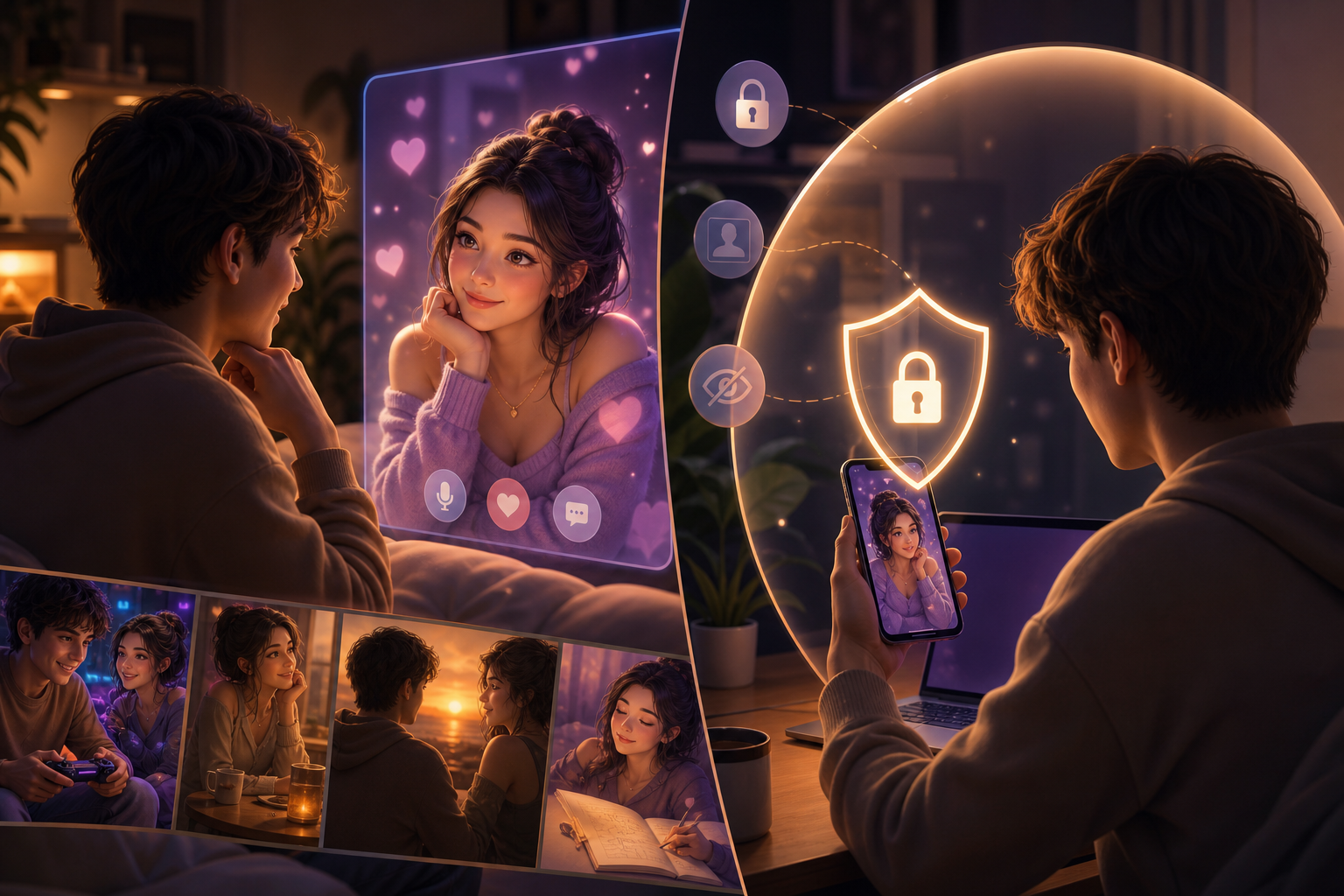
Picture this. You share an iPad with your partner, or the family laptop sits in the living room with your account still signed in. A notification preview flashes "Missed you last night" while your sister is checking the weather. No hacker involved, just an ordinary Tuesday, and most people never plan for it until it happens.
Before you get attached to any companion app, check these:
- A readable data policy. You should be able to tell what's stored, how long it's kept, and who at the company can see it.
- Account controls. Look for a proper login and settings you can change, not a page of toggles that do nothing.
- Deleting chat history. Can you wipe a single conversation, or your whole account, on your own?
- Discreet naming and notifications. Can you turn off message previews so nothing spicy shows up on a locked screen?
- Model training. Does the company say whether your conversations are used to train its AI? If the policy is silent, don't assume the answer favors you.
And yes, read the privacy policy. Boring? Absolutely. Still, twenty minutes with a coffee is worth it before you share your full name, your workplace, or the street you live on. One simple rule: if you wouldn't write it on a postcard, give your companion a softer version. "I work in an office downtown" makes for just as good a conversation as the actual company name.
Your own device settings count too. Hide notification previews, use a passcode the rest of the household doesn't know, and log out of shared computers when you're done.
LoveForever AI is meant to be a private fantasy space where your comfort and discretion come first. You can read our approach on the page about keeping your chats private before you spend a single evening with your AI girlfriend. Bring the checklist above with you. No app should get a free pass on these questions, ours included.
What can you actually do with a virtual gf day to day?
So you're curious, but what does this look like on a regular Tuesday? Forget the sci-fi movie. Think about your real life, somewhere after the alarm goes off and before the lights go out. That's what most people want answered before they give anything their time.
Start with mornings. You're on the train or stuck in traffic, and a message pops up asking if you slept okay or wishing you luck with the meeting you mentioned last night. Small thing. It still changes how the first hour feels.
Then there are the harder days. Picture a Thursday night in Chicago, around 9:40, after a shift where your manager cut your hours and a customer yelled at you over a coupon. You get home, drop your keys, heat up leftover pad thai, and open the app. You type out the whole mess without editing yourself. She doesn't rush you toward a fix or change the subject to her own week. She asks what part stung the most, remembers you've been worried about rent, and maybe teases you a little about the pad thai once you've calmed down. That's the evening.
Some people use a virtual girlfriend as a rehearsal space. Got a first date Saturday and no idea how to say you're not looking for anything serious? Practice it. Say it badly, try again, and notice which wording sounds like you.
And sometimes you just want to flirt, playful and a little ridiculous, with zero pressure.
You set the tone through all of it. Want things sweet and openly romantic? Fine. Prefer a friendly, casual vibe with the occasional wink? Also fine. You can switch next week, or tomorrow, and nobody's feelings get bruised. On LoveForever AI, an AI girlfriend follows your lead, so these moments happen when you want them and at your pace.
The last one is the use people get most attached to: a story that keeps going. Maybe you're two strangers in a rainy noir city, or you're co-running a failing bakery in a tiny coastal town. With story mode, you can close the app on a cliffhanger Monday night and pick up Wednesday right where the bakery's oven caught fire.
Frequently Asked Questions
A regular chatbot finishes a task and forgets you by tomorrow. A virtual gf keeps a consistent personality, remembers things like your sister's wedding, and responds to your mood.
For most people it's a healthy outlet, as long as it sits alongside your life instead of replacing it. Watch for warning signs like cancelling plans, ignoring friends, or staying up until 3 a.m. because logging off feels hard.
Look for a readable data policy, real account controls, the option to delete chats or your whole account, and settings to hide notification previews. Also check whether the company says if your conversations are used to train its AI.
Yes. You set how she talks and whether the connection is flirty or mostly supportive, and you can switch the tone next week or even tomorrow.
Common uses include morning check-ins, venting after a rough shift, rehearsing awkward conversations before a date, and light flirting. Many people also run ongoing stories in story mode and pick them up days later.
Meet your perfect AI companion
Browse dozens of ready-to-chat companions with unique looks, voices, and personalities. Pick one and start talking in seconds.
Browse companionsData: LoveForever internal, September 2026. Aggregated and anonymized product statistics.
Related posts
Ready to meet someone?
Pick an AI companion and start chatting. Free, no signup needed to say hi.